“One country, thousands of islands, endless ways to explore — the Philippines makes every journey part of the adventure.”
Ready to explore the islands? Mabuhay!
The Philippines is more than a destination. It’s a string of islands, each with its own rhythm, with a flavour of their own and a new discovery around every corner.
One morning, you may find yourself viewing the sunrise over Manila. You could be strolling down the white-sand beach of Boracay by afternoon. The mountains of Cebu or Palawan’s turquoise waters may be calling your name after a few days.
It is at this point that Philippines domestic flights come into play.
There are thousands of islands in the archipelago and flying can be one of the easiest modes of transportation between the main islands in the country. However, if you know which airport to fly into, how much time to allow, which airline flies your route and what to do when plans change can really help.
That is why we have created this guide for you.
If you are about to embark on your first trip to an island or a multi-stop holiday or just looking for a way to figure out those domestic flights Philippines, World Pinoy Flights can help you have a plan your island-hopping journey with confidence!
Sometimes, the best part of a Philippine holiday is not picking just one island.
It is discovering how easily one adventure can lead to another.
Why fly between the Philippine islands?

The Philippines is an archipelago, so many destinations are separated by stretches of sea.
Ferries are convenient on various routes, especially between nearby islands. However, if your travel plans involve a longer distance, then airplane travel can save precious holiday time.
A traveller might start in Manila and then head to either Palawan, Davao or Cebu in the same day without taking the time to drive across the land or sail across the ocean.
That is why Philippines domestic flights is especially convenient for those who wish to explore more than one area in the Philippines during their stay.
Think of your trip as a “necklace of pearls. One of the pearls is Manila. Cebu another. Palawan another. Boracay another. Your flight is merely a string that connects them.
What is the process of domestic flights in the Philippines?
The Philippine system may be a bit different if you have been familiar with travelling around Europe.
There is no country’s national airport. Philippines has airports on its various islands and regions.
The Civil Aviation Authority of the Philippines oversees civil aviation safety and regulation, while airport operations may be handled by different authorities or operators.
Your journey could then be:
- London to Manila,
- Manila to Puerto Princesa,
- Puerto Princesa to Cebu,
- Cebu to Boracay,
- Boracay to Manila,
- finally, to London. Or maybe:
- Manila to Bohol to Cebu to Boracay to Manila to London.
The key is to consider holidays as series of individual flight routes instead of a single journey.
Before purchasing flights between islands Philippines, you should make sure you check the airport of all destinations. Often a destination name isn’t sufficient.
The airport may be some kilometres away from the town, beach or resort you really want to go to.
Major domestic routes travellers often use
Several of the routes are common in Philippine tour packages.
Manila to Cebu
One of the best connections for travellers who are travelling from the capital to the Visayas.
Cebu is a great base from where you can explore nearby islands and beaches whilst Manila is a completely different city experience.
Manila to Puerto Princesa
Puerto Princesa is a tourist hotspot for those who wish to go to Palawan.
It may be helpful if you are planning to go around Palawan before going elsewhere.
Manila to Bohol
Bohol is famous for its beaches, countryside, wildlife and famous Chocolate Hills.
When it comes to travelling to Bohol, it is another convenient way for travellers to add it in their multi-stop Philippine holiday from Manila.
Manila to Davao
Davao is crucial for visitors coming to Mindanao.
It provides a contrast to the Philippines with a strong city identity and access to nature and mountain experiences.
Cebu to other islands
Cebu is also handy as a transit hub between the islands of the Visayas. If you are a flyer, you might be able to fly into Cebu first and then on to another location instead of flying back and forth from Manila between each stop.
There, knowledge of Philippines internal flights can come to your aid in creating a wiser route.
Which airlines fly between Philippine islands?
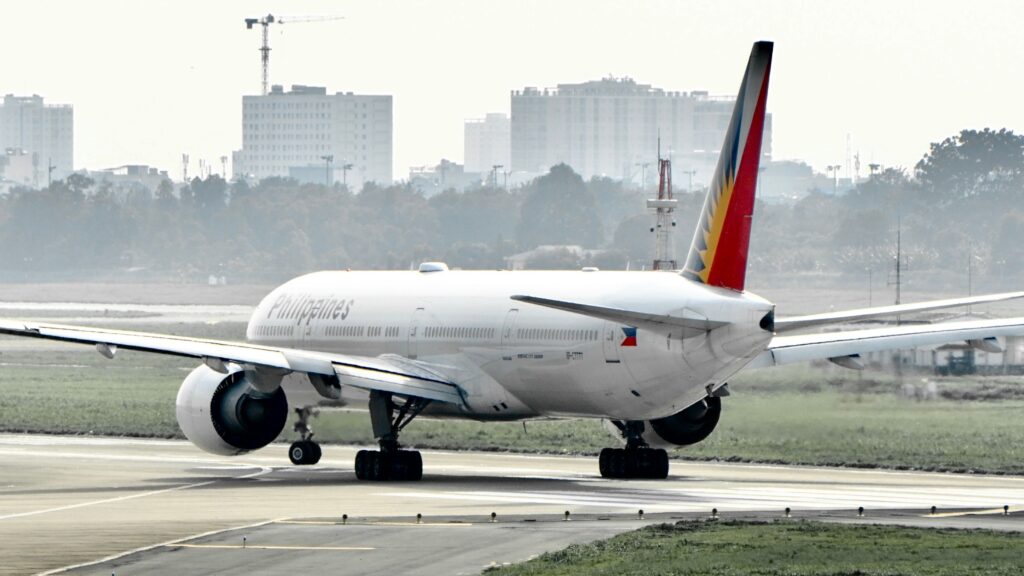
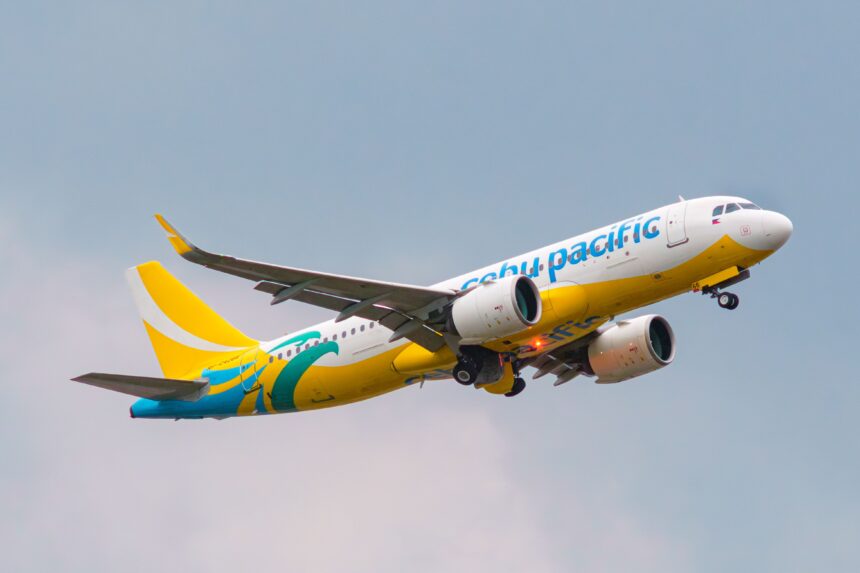
When searching for domestic flights in the Philippines you will most often encounter domestic airlines like Cebu Pacific, Philippine Airlines and Philippines AirAsia.
Routes, times and aircraft and fares are subject to change, please refer to the current airline timetable before finalising!
- Do not use the lowest advertised fare as your only consideration.
- Take in the whole ride.
- Does the fare include checked baggage?
- When does the flight take off?
- Will you have to buy a seat?
- What is the airport to hotel distance to your destination airport?
- If you were to purchase a ticket at the extra cost but for a few extra hours, would you do it?
These little things can make the difference in the actual expense and enjoyment of a trip.
You can also check our guide on what airlines fly to the Philippines for broader information about international carriers that fly to the country.
What do you need to know about bags?
One of those things can be overlooked when you are booking a cheap flight.
There is no “automatic” right to a large suitcase for a basic fare. The amount of bags allowed and extra fees for them are subject to change based on the airline and the type of fares.
This is exactly what this implies – a low-cost flight may look attractive when you first see it, but when you factor in your bags, the cost can be higher.
Before paying, check:
- cabin baggage allowance
- checked baggage allowance
- weight limits
- number of bags permitted
- additional baggage charges
- regulations for sporting goods or special items.
If you are travelling with a suitcase, compare the total price, rather than simply looking at the advertised fare.
Before you travel you may also want to read our guide on Philippines Airlines baggage allowance.
What are the best times to fly domestically?
There is no golden day to book tickets as it does not guarantee the lowest fare.
But making last minute plans for a flight with multiple connections is not always a safe bet. If you are familiar with your primary destinations, then it makes logical sense to look up domestic flights in the early stages.
This is even more significant when travelling during the peak tourist season, on holidays and popular island breaks. A little planning can also give you more choice of departure times.
It is sometimes not the best flight who flies first. If you are looking to save money, you may want to leave at 6am, but you will need a very early hotel transfer. If you can fly a little later, it will make the morning a lot easier.
The flight that works for you for your entire day is the right one, rather than the one with the lowest number next to the pound sign.
Can you find cheap domestic flights in the Philippines?
Yes, fares can differ significantly and there are promotional fares.
The first tip for finding cheap domestic flights Philippines is to compare the dates and not one at a time. Sometimes, a day change in travel date may also result in a change of fares.
You can also consider:
- Early flights – Morning flights might be suitable for some routes.
- Plan to travel midweek – If it doesn’t matter when you go, look at the weekdays versus weekends.
- Careful booking of bags – Only paying for the bags that are needed.
- Look for local options – Alternative airports may be available.
- Don’t connect unnecessarily – Sometimes it’s not worth paying extra to avoid an unnecessarily long, awkward day’s trip.
Keep in mind that the lowest-priced ticket does not necessarily represent the lowest cost journey.
Flying between islands: what should you pack?
The term ‘island-hopping’ seems like an easy concept until you must carry your big suitcase from one airport to another.
If you’re planning to go flying between islands Philippines, it can be easier if you have lighter baggage. Consider clothing that is breathable, comfortable shoes and items that can be worn more than once.
Lightweight day bags also come in handy for carrying essentials near you when transferring to and from the airport.
Be sure to save the following key items:
- passport
- phone
- wallet
- travel documents
- medication
- chargers
- valuables
Packed in your cabin bag, not in a checked bag.
Finally, if you are on a holiday that includes beaches, boats and internal flights, a small waterproof pouch can prove very useful.
Take a break between flights
One of my top planning tips for travellers when they are making a multi-island holiday itinerary.
No, don’t make all the connections so tight because it seems that the flight times do.
When it’s a delayed flight, it could impact the remainder of the day.
If you do have a separate ticket for your next flight, then the risk is even more important.
Picture arriving in Cebu after a flight from Manila and being scheduled for another independent flight shortly afterwards. Picture when you arrive in Cebu after a flight from Manila and are scheduled for another independent flight shortly after.
It might be possible to have the time. But will you still feel relaxed?
Giving yourself some breathing room can help make your holiday not be a race through the airport. If possible, have a comfortable connection especially when your connecting flights are booked on separate tickets.
Should you fly or take a ferry?
The answer depends on your route. Ferries are an option for shorter trips between islands that are close together. You can see more of the water and, depending on the route, the trip itself can be a part of the holiday.
When locations are distant, it is sometimes more convenient to fly. These two can even be included in a good Philippine itinerary. It is not necessary to use one of the methods throughout the whole holiday.
Maybe you first fly from Manila to Cebu, then take a ferry to a nearby island and then fly again to Palawan. The beauty of travelling around the Philippines. The route can take a different form.
The smartest route to island hopping!
Don’t just pick a random location, but make your holiday plan a geographical flow. Start by making a list of your ideal destinations for travel.
Then ask:
- Where will I arrive?
- Which airport is closest to each destination?
- Can I travel directly to my next stop?
- Do I need to return to Manila?
- Could Cebu be used as a hub?
- Where should I spend the longest part of my holiday?
This can prevent redoing things that are not needed.
If this happens all the time, it may be possible to create a route that gradually transitions to other areas.
We can also use our Philippines travel guide to help you consider how various destinations can play together.
A simple island hopping example
Suppose you are given 10 days. You may start by spending a couple of days in Manila and then flying to Cebu. After exploring Cebu and its surrounding attractions, continue towards another island destination before flying back towards Manila for your international flight home.
It will depend on your interests, flight schedules and travel dates.
The concept is easy, though:
Avoid planning the map before the flights. Plan them together. You can use your flight network to help you determine what destinations are sensible.
What do you do if your domestic flight gets delayed?
The delays are common in any other flight, and this is the same for flights in the Philippines. The weather may also impact flights, especially in times of turbulent weather.
If you have a connecting flight, make sure to watch the bulletins of your airline and do not book a connection that has little or no buffer for problems.
It is also a good idea to have essential booking information on your mobile device. When there is a change you want your confirmation number, airline information and onward booking on hand.
However, when plans change, it’s a much better situation for a calm traveller with the right information.
Do you need to arrive early at the airport?
Yes.
Don’t think of a domestic flight as being like you can arrive at the last minute. Baggage drop, security and boarding are all time-consuming at the airport. The best advice for arriving early is to follow the advice of your airline.
If your airport is busy or you are not familiar with the airport or your flight is a checked-baggage flight, it’s good to have some time to spare. It’s a lot more pleasant to sit at the gate with a cup of coffee than to realize your holiday has begun with a dash through the terminal.
The small things that make the island hopping process smoother
I always find that the tiniest things can make a big difference, after helping travellers through Filipino journeys.
- Save Hotel Address Offline.
- Be familiar with the name of the airport you are flying to.
- Verify the weight limit of your bags prior to departure from the airport.
- Do keep your flight confirmation.
- Keep some local currency on hand for less pricey items.
- Consider carrying a portable charger with you.
- And most of all, don’t schedule it so full that you can’t accommodate for anything that comes up.
- A bit of flexibility is rewarded in the Philippines.
- Afternoon can easily turn into a late lunch.
- A leisurely morning can be an additional stroll by the beach.
- A lost connection could lead to finding yourself in a location you never intended to find.
Those impromptu moments, at times, are the stories that you will most likely remember for the rest of your life.
Your journey in the Philippines doesn’t have to be complicated
The number of islands and airports involved might seem like a daunting prospect when planning Philippines domestic flights.
When you get the idea of the major routes, the limitations on what you can carry and how long it takes to make a connection, and where the airports are located, it’s much simpler.
- Consider other than the flight number.
- Consider the entire trip.
- Where will you be when you wake up?
- What will be your mode of transport to get to the airport?
- What do you want to take?
- Where do you think you will be dropped?
- What will be there when you go outside?
It’s the way an island-hopping holiday starts to feel like one beautiful story, as opposed to a list of bookings.
Philippines Domestic Flights: Your handy checklist
To check before you book:
- Airport: Do you get off at the correct airport?
- Hotel & Transfers: Are you able to leave as described by the hotel and transfers?
- Baggage: Does it include checked luggage?
- Connections: Have you allowed enough time between flights?
- Cost total: did you count in any extras and baggage?
- Weather: Will weather conditions impact plans?
- Flexibility: Do you have enough time to be flexible?
- Transfers: How far is the airport arrival location from your accommodation?
Ready to see more of the Philippines?
The Philippines is too beautiful to experience from just one place.
One island provides you with beaches. Another one provides you mountains. The other takes you to vibrant streets, local tastes and a whole other beat.
By planning from the outset, domestic flights Philippines can help you link those experiences together without having to waste your valuable holiday travelling slowly from one location to the next.
Therefore, travellers, do not set your travel plans in stone.
- Welcome to the country with Manila’s introduction.
- Allow the sea to take you to the Visayas through Cebu.
- Take your time in Palawan.
- Surprise yourself by another island.
And, when the next flight comes up on your screen, keep in mind — you’re not just getting from one airport to another. You are embarking on the next chapter of your Philippine life.
Congratulations to Mabuhay and happy island hopping with World Pinoy Flights!
FAQ
1. Which major airlines operate between the islands in the Philippines?
The principal local airlines in the Philippines are Cebu Pacific, Philippine Airlines, and Philippines AirAsia.
2. Are checked-in baggage allowed with ticket prices?
No. An economy air ticket normally does not include checked baggage prices, so it is important to check baggage policies before making a booking.
3. What mode of transportation is better for inter-island trips, ferry or flight?
Opt for ferrying for short distances and flights for longer distance trips.
4. Should Cebu be preferred over Manila as a city of travel in the Philippines?
Yes. Using Cebu will allow flying between the islands located in the central region of the country without making trips back to Manila.
5. Is there any specific time gap needed at the time of connecting flight?
One should keep enough time before and after the connecting flight to make room for the possibility of airs delays and transit.
Source
ebooks
COUNTRY
DESTINATIONS
- https://www.youtube.com/watch?v=9URPQW4-Wio
- https://www.youtube.com/watch?v=cEbk7WcQ_xw
- https://www.youtube.com/watch?v=AkeJLZAZpW8
- https://www.youtube.com/watch?v=F8lo1N_ybhw
- https://www.youtube.com/watch?v=ncJIhVNqjCs
- https://www.youtube.com/watch?v=7LdEYkudOSQ
- https://www.youtube.com/watch?v=ve4w4XFdXrw
- https://www.youtube.com/watch?v=Jow2EhHWPsQ
- https://www.youtube.com/watch?v=xxUyQWWhJik
- https://www.youtube.com/watch?v=vcQrY54pI74
- https://www.youtube.com/watch?v=QYluBhEz8n4&pp=0gcJCT8MAYcqIYzv
- https://www.youtube.com/watch?v=1tI7AxMWgkg
- https://www.youtube.com/watch?v=027Sz55bSx0&pp=0gcJCT8MAYcqIYzv
- https://www.youtube.com/watch?v=XPQErsFd6Qo
- https://www.youtube.com/watch?v=S25ZHSPprVg
SHORTS