“Your passport is ready. Your island adventure is calling. Let’s get your pesos sorted.”
Hey, travel besties! Ready for the Philippines?
Your flights are booked, your island-hopping plans are taking shape and maybe you are already imagining yourself watching the sunset in Boracay, strolling down the street in Cebu or exploring the beautiful landscapes of Palawan.
Before you begin to spend your holiday money on mango shakes, island trips and delicious Filipino food, and memorable Filipino food, however, there is one practical detail to understand before you travel– Philippines currency.
Knowing what money you will use, where you can withdraw cash, whether your card will work and how to exchange your pounds can save you time, money and a few unnecessary travel worries.
In fact, many first-time travellers will find out quickly that Philippines money is not a language they have to master, but rather something you need to know how to manage according to where they are going on their holidays.
Your card might come in handy in the hustle and bustle of a city. Now on a small island, cash is your best travel buddy.
Okay, let’s simplify managing your holiday money to the Philippines.
Whether it be the Philippine peso and the exchange rates, ATMs, cards, cash and tips on how to spend, this ‘World Pinoy Flights’ guide will help you travel with more confidence.
What Currency is used in the Philippines?
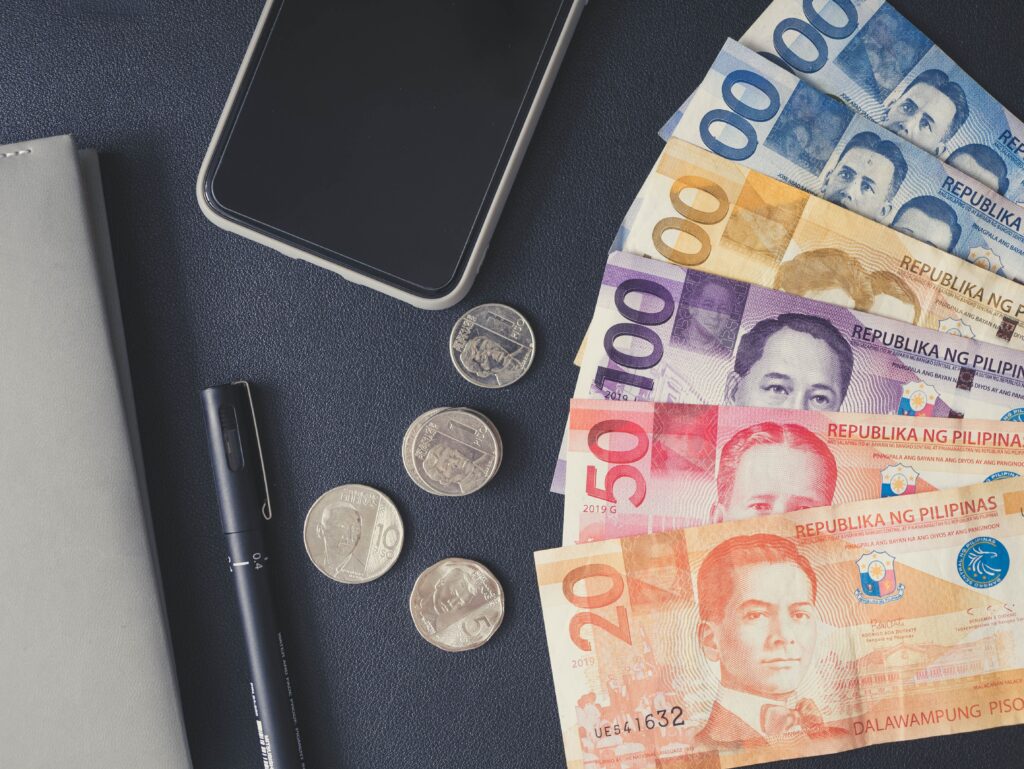
The official currency of the Philippines is the Philippine peso, the symbol of which is PHP, and is usually represented as ₱.
Prices can be expressed in a variety of different forms, including:
- ₱100
- PHP 100
- 100 pesos
They all refer to the same currency. Coins are typically used for smaller transactions and banknotes for things like buying food, travelling, shopping and going out.
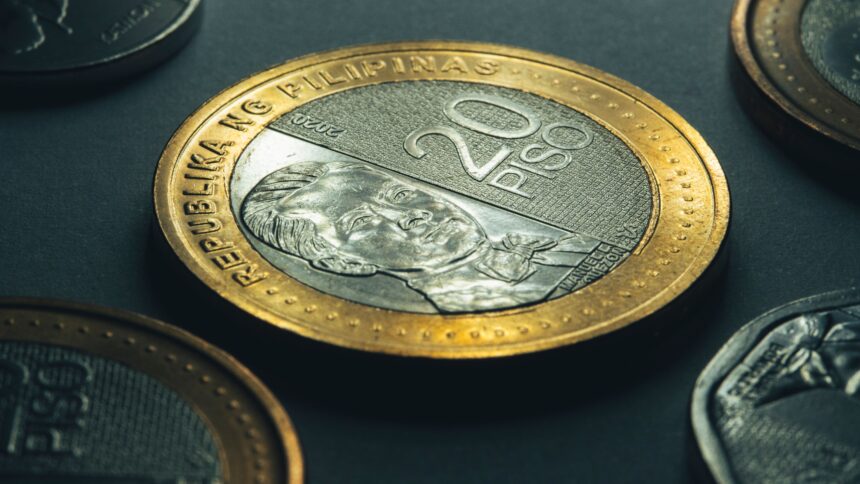
You may come across coins in denominations such as ₱1, ₱5, ₱10 and ₱20, while banknotes include ₱20, ₱50, ₱100, ₱200, ₱500 and ₱1,000.
A useful habit is to keep a mixture of notes rather than carrying only large denominations.
Why?
A small cafe, a local food vendor, a jeepney driver, tricycle driver or a small shop may not always have the change for a big note.
The small detail can make a world of difference when you’re on the road.
Understanding Philippine Currency Before You Fly
It’s useful to do some research on the exchange rate of pounds sterling to pesos before you travel.
You can use the GBP to PHP search to get an idea of the rate on the market, but please note that the rate you find online is not necessarily the rate you will receive if you are exchanging actual cash or making a card transaction.
Providers, banks and card companies can impose their own rate or charge. That’s why made sure to pay attention to the headline exchange rate.
Consider the overall cost of the transaction. If the exchange rate is a little higher for the provider, for instance, but they charge a high commission or service fee, it may end up costing more.
One easy tip:
Prior to your holiday, get an idea of how much ₱100, ₱500 and ₱1,000 are in pounds. Don’t memorise difficult conversions. You just want to get the hang of placing values, this helps to assess the reasonableness of a menu, the cost of a cab ride, or the cost of a memento.
Exchange rates fluctuate and it is always best to check the current rate just prior to your travel.
Philippines Money: Cash Still Matters
This is one of the worst things a traveller can do, to assume that a bank card will be accepted anywhere.
It won’t.
In large urban centres and well-known tourist destinations, card payments are becoming more prevalent. Visa or mastercard may be accepted at hotels, shopping centres, larger restaurants, supermarkets and many tourism businesses.
Just a short distance out of the hustle and bustle of urban areas and things can be different. Small independent restaurants, stalls at the markets, local transport services and independent shops and businesses on remote islands may want cash.
That’s where it can be helpful to have cash when visiting destinations across the Philippines. Another reason to bring along a bit of physical cash: connectivity.
A card machine is not much good if there is poor internet coverage, or a payment terminal is not available or a business has temporarily lost its internet connection.
A practical approach
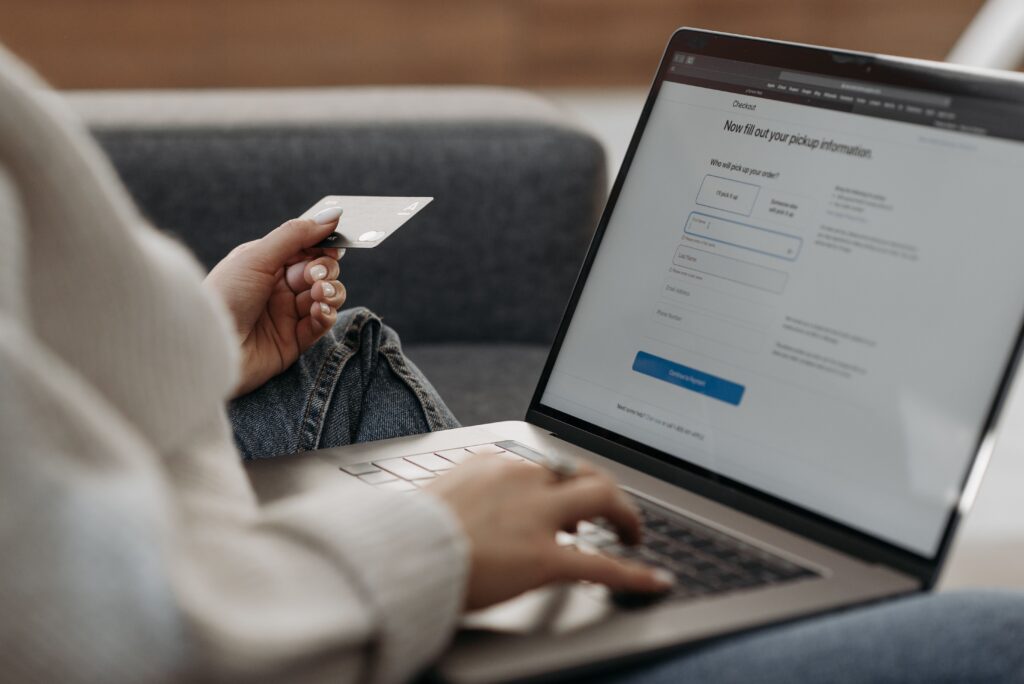
It is not a good idea to carry all your holiday money in cash. Instead, keep some cash for everyday expenses, use your card where accepted and carry a backup payment method for emergencies.
Instead, Have some cash on hand for normal expenses + card for bigger/p unexpected expenses + alternative payment method. This will allow you to have flexibility without putting all your travel money into one place.
Using Cards in Philippines: Where Can You Pay?
Generally, using cards in ‘Philippines’ is the easiest in larger towns, cities or established tourist businesses.
Businesses may accept Visa and Mastercard, but acceptance depends on the individual business.
Card payments might be convenient for:
- Hotels and resorts
- Shopping centres
- Supermarkets
- Larger restaurants
- Major tour operators
- Some cafés
- Online travel bookings
- More significant transport and tourism enterprises
But not all businesses that have a card logo will take your card.
Before ordering or utilizing a service, it’s generally wise to ask.
What about contactless payments?
Some establishments, especially in more modern businesses and urban areas, accept contactless payments, but this is not the case everywhere.
Therefore, even if your UK bank card is contactless, do not use it as your sole card and store your physical card in your wallet with you.
your phone battery may run flat when you need it most.
Should You Take Pounds or Pesos?
For most travellers to the UK, it may be possible to carry a few pounds and exchange them for pesos, but it is not always essential to bring a large sum of foreign currency.
There is also the option of withdrawing pesos at your destination depending on the bank, card and ATM costs.
If you do bring pounds, make sure your notes are clean and in good condition. Exchange providers may have their own policy about notes they will accept.
Don’t change all your money at the airport, just because it is easy.
Convenience does not always equal the best deal, but exchange counters will come in handy during an emergency.
It is better to look at the rates and fees, if possible.
Philippines ATM Guide: Where to Withdraw Cash
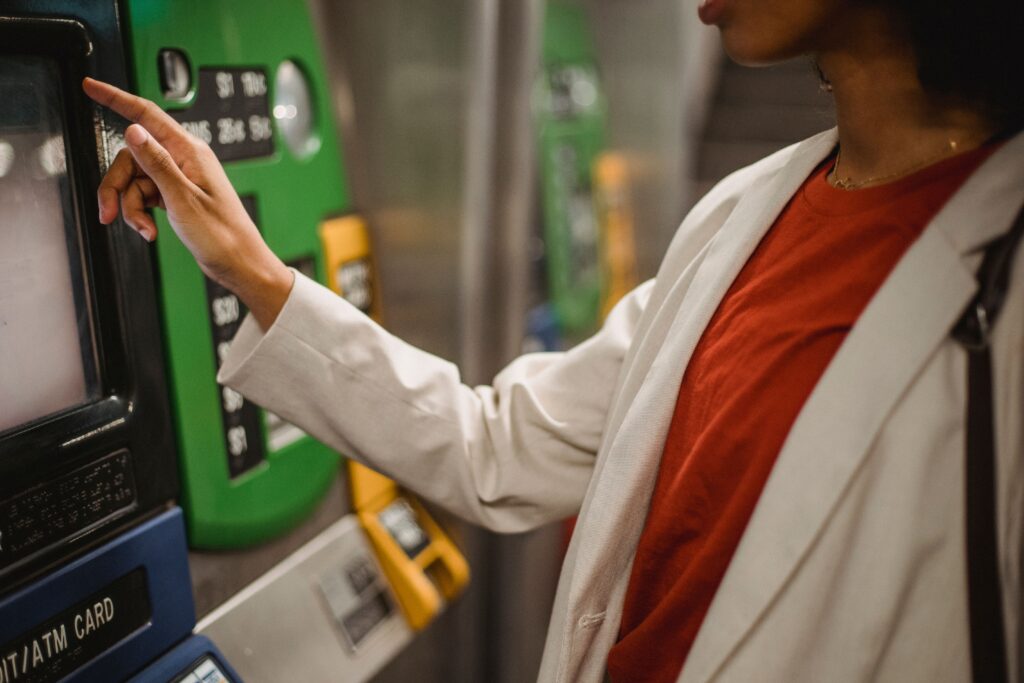
If you must get more pesos after you’ve arrived at your destination, a Philippines ATM will be very useful.
ATMs are plentiful in major cities and popular tourist destinations but may be less common in smaller islands and in remote locations. Here is a simple guideline to help you prepare – Take out sufficient cash prior to going somewhere far.
Picture landing on a lovely island and planning a peaceful afternoon on the beach only to find that the closest functioning ATM is several kilometres away or you can’t find any. This isn’t the kind of island getaway you had in mind.
ATM fees to watch
When it comes to withdrawing money abroad there may be several costs to consider:
- A fee charged by the Philippine ATM operator
- A fee charged by your UK bank or card provider
- Foreign exchange charges
- Dynamic currency conversion, if offered
Always check the screen carefully before confirming a transaction.
Should You Accept ATM Conversion to Pounds?
This is quite a significant point to note.
If you need to take out money overseas, an ATM will probably ask if you wish the transaction to be carried out in pounds or pesos. The following may be found in the wording:
Would you like to translate it to GBP? or continue without translation?
If you select the conversion from the ATM, the exchange rate of the ATM may also be applied. In many situations, travellers prefer to let their own bank or card provider handle the currency conversion by selecting the local currency — PHP — rather than accepting the ATM’s offered conversion.
However, check your own bank’s foreign transaction terms before travelling because fees and policies differ. It’s not a good idea to press the button that seems to be the easiest.
How Much Cash Should You Carry in the Philippines?
There is not a single number that works for everybody.
The amount of money you need per day will vary depending on your travel destination, where you are staying, what you will be doing and your spending habits. An individual staying at a city hotel and dining in bigger restaurants, for instance, may use the card a lot.
If they are island hopping, frequenting markets and utilizing local transport, they might need to use cash more extensively. A good strategy is to have enough to cover anticipated spending for the day plus a buffer for emergencies. It is not necessary to have all your holiday money in your pocket.
Keep your money in different places
If you want to play it safe, you may want to invest in two places:
- Your everyday wallet
- A secure place in your accommodation
- Your main bank card
- A backup card
- An emergency small cash fund
One wallet loss doesn’t necessarily mean everything is lost.
Philippines Currency Exchange: Where Should You Exchange Money?
Foreign currency can be exchanged at banks or at authorised exchange agents, depending on the country. Exchange counters are also offered at airports, shopping centres and tourist areas.
When you’re ready to exchange money, check:
Commission + service fee + final amount received = Exchange rate
This is much more helpful than just examining the listed price. The provider could offer a very good rate but then impose a further charge.
A second one could provide a somewhat different rate, but without any evident commission. What’s important is how many pesos you receive for your pounds after all charges.
How to find a better deal for GBP to PHP?
When checking the GBP to PHP exchange rate, there is no need to monitor it every few hours. Instead, focus on comparing exchange rates and avoiding unnecessary fees.
Markets are dynamic and no one knows the exchange rate of the future. Instead, concentrate on sidestepping needless charges.
Here are a couple of everyday practices:
1. Check your bank’s foreign transaction fees
Certain cards and UK banks provide cheaper foreign spending than other.
2. Make comparisons before making cash changes.
If making a big change, compare multiple providers.
3. Do not swap all of your stuff at the airport.
There are other options that may be more convenient.
4. Avoid unnecessary currency conversions
If you are offered the option of using the card in either GBP or PHP, be aware of what you are committing to before confirming.
5. Keep your receipts
These may be beneficial if you need to verify the amount you exchanged or if you want to find a transaction later.
Is It Better to Use Cash or Cards?
The answer is very easy: Use both.
Consider them two travel tools, not competitors. Cards may be helpful in hotels, large restaurants and for larger purchases. Cash may be vital for transport in the local community, markets, smaller businesses and areas where terminal equipment is not installed.
This is a combination that provides you more freedom.
A helpful holiday balance
- Card: Payments with higher volumes and there is a high level of trust in payment acceptance.
- Cash: small items, local and distant places.
- Backup card: unexpected problems and emergencies.
It’s generally a lot easier than forcing your whole trip to be cash only or card only.
Common Money Mistakes Travellers Make
There are small money mistakes that even seasoned travellers make.
Here are some common money mistakes to avoid.
- Taking too much cash – It’s not necessary to have a day bag that functions as a bank.
- Forgetting smaller notes – A ₱1,000 note may not always be convenient for a tiny purchase.
- Assuming all ATMs are in operation – ATMs may become unavailable temporarily or may impose withdrawal limits.
- Charging off foreign transaction fees – A card may seem like a good deal but will incur foreign transaction fees on each purchase.
- accept every currency conversion offered – Check if the currency is being converted into pounds or if it is an extra charge in local currency.
- Have a card for backup – If you lose your wallet, another one to back it up can make a bad situation good.
Philippines Money Tips for Island-Hopping
In this case, it’s even more crucial that you plan your finances. Being an archipelago, the Philippines is prone to travel experiences that can be vastly different from one island to another. When you’re about to travel to another major city or tourist hotspot, consider your next city.
Ask yourself:
- Will there be an ATM?
- Do cards work in the hotel?
- Do you accept card payments for food?
- Do I require cash for transfers, boats or local transport?
If the answer isn’t clear, remove a few pesos before going on. By a bit of preparation, you can save time during the holidays looking for an ATM.
Here is a Quick Philippines Currency Checklist
Just take this quick checklist with you when you’re flying from the UK.
- Make sure to note the current exchange rate of GBP to PHP
- Check your bank’s overseas fees
- Pack at least one physical payment card
- If possible use a spare card as back-up
- Know your card PIN
- Have a bit of cash set aside for emergencies!
- Download your banking app
- Make sure you can contact your bank if needed
- Do not use cards exclusively
Take out enough pesos before going to remote islands. These are small things to do but can help make a holiday run a lot smoother!
Philippines Currency is the easiest to think about!
Money should never be the star of your vacation.
Your stay in the Philippines is about to remember the people, the food, the beaches, the culture and the little moments you will never forget when you are at home.
Knowing the ‘currency in the Philippines’ destinations is just enough to ensure that you can enjoy those moments without constantly checking if your card will work or if you will be able to get your cash withdrawal.
The “magic” is very simple, and it’s fabulous. Carry some pesos. Keep a card. Have a backup. Check the fees. And plan when travelling to remote islands.
Once you do this, you can begin the fun part.
- The street food.
- The island boats.
- The sunsets.
the little treats that make your holiday special and maybe that additional mango shake.
Final Vibes: Travel Smart, Spend Freely
Exploring the Philippines is about much more than managing money. It’s understanding enough to spend confidently! Knowing the Philippines currency can make everyday travel easier, from the first time you will see the coffee served at the airport, till you arrive at the last beachside dinner. Having some money on hand, be careful with your cards and remember that there is more to planning a trip to a remote island than a city break.
Once the nuts and bolts items have been dealt with?
Allow the Philippines to do what they do best.
Give you stories. If you’re looking for more inspiration and practical planning, check out our Philippines travel guide, our tips on the cost of living in the Philippines, how to experience the Philippines on a budget, and our Philippines travel advice which you will need as you plan your trip to the Philippines.
Your trip is always a positive experience with World Pinoy Flights.
Mabuhay and happy trips!
FAQ
1. What currency is used in the Philippines?
The official currency is the Philippine Peso (PHP), with the symbol ₱.
2. Should I pay with cash or card?
Use both. Cards are accepted in major cities, hotels and big shops but cash is vital on small islands, local transport and small vendors.
3. Can I use contactless payment on my phone?
Not very common, some modern city businesses accept contactless payments. Always bring your bank card with you and cash.
4. Should I choose GBP or PHP when paying by card or using an ATM?
Always opt for PHP (local currency). Paying in GBP gives foreign banks the opportunity to determine their exchange rate which typically will cost you more.
5. Do I need to use ATMs while island hopping?
No. ATMs on smaller islands can run out of cash or lose connection. Withdraw the correct amount of pesos prior to going to remote areas.
Source
ebooks
COUNTRY
DESTINATIONS
- https://www.youtube.com/watch?v=9URPQW4-Wio
- https://www.youtube.com/watch?v=cEbk7WcQ_xw
- https://www.youtube.com/watch?v=AkeJLZAZpW8
- https://www.youtube.com/watch?v=F8lo1N_ybhw
- https://www.youtube.com/watch?v=ncJIhVNqjCs
- https://www.youtube.com/watch?v=7LdEYkudOSQ
- https://www.youtube.com/watch?v=ve4w4XFdXrw
- https://www.youtube.com/watch?v=Jow2EhHWPsQ
- https://www.youtube.com/watch?v=xxUyQWWhJik
- https://www.youtube.com/watch?v=vcQrY54pI74
- https://www.youtube.com/watch?v=QYluBhEz8n4&pp=0gcJCT8MAYcqIYzv
- https://www.youtube.com/watch?v=1tI7AxMWgkg
- https://www.youtube.com/watch?v=027Sz55bSx0&pp=0gcJCT8MAYcqIYzv
- https://www.youtube.com/watch?v=XPQErsFd6Qo
- https://www.youtube.com/watch?v=S25ZHSPprVg
SHORTS