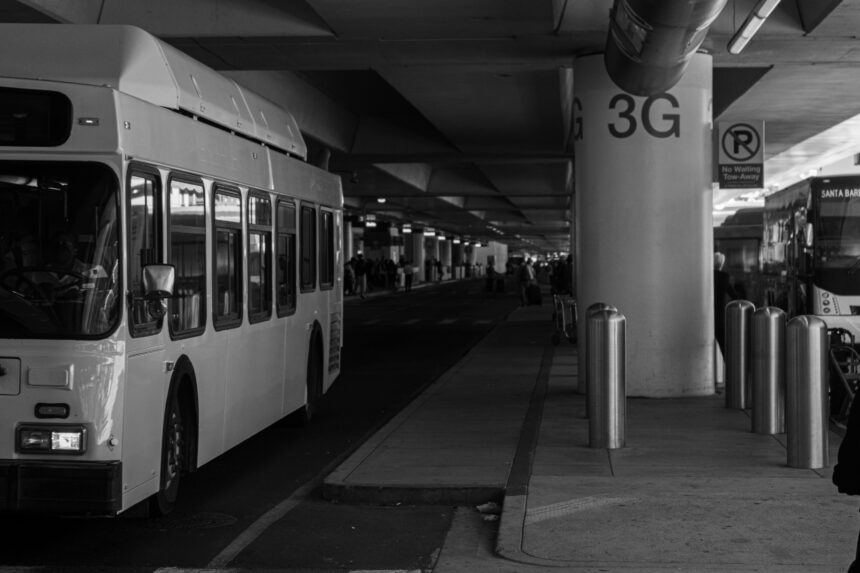
Kamusta, my dear travellers!
If this is your first visit to Manila. Maybe you’ve come all the way from London and are finally excited to be able to see your family or visit the Philippines. You collect your passport, Follow the signs to the arrivals area, and you’re all set to start considering your next flight.
Perhaps it’s a call from Cebu, your family is waiting in Davao or You’re looking forward to exploring the beautiful beaches of Palawan. However, one thing needs to be clarified first: The next flight departs from another terminal.
Changing terminals might seem straightforward at first. But Manila’s airport terminals are in separate buildings, roads can be crowded and you must know the right means of transport.
Don’t worry, my dear travellers. Taking a few steps can make the trip a lot easier.
Welcome to World Pinoy Flights. This guide will tell you the layout of the airport terminals, the free shuttle, how long to expect and what to do if you have a connecting flight. If you are travelling between the UK and Philippines or between the Philippine islands, here’s what you need to know before making the transfer between naia terminals at Ninoy Aquino International Airport (NAIA).
Getting to Know Manila Airport
Ninoy Aquino International Airport (NAIA), commonly known as Manila Airport, is the Philippines’ main international gateway. It is linked to Metro Manila to the rest of the country and the world.
It is important to note that NAIA is not a traditional airport, having every terminal linked together by walkways inside the building or an airport train. The main passenger terminals are separate buildings, so passengers typically must walk outside between the buildings.
Currently, the airport’s three passenger terminals are Terminal 1, Terminal 2 and Terminal 3 (as of November 2026). The previous Terminal 4 was shut down in November 2024. So, there may be outdated travel guides with four terminals.
Always check the latest information at your airlines terminals before travelling. Check the official New NAIA website for airport information and functions.
Understanding the Three Operating Terminals
The first key to a hassle-free manila airport terminal transfer is to know where your flight is going to and from. This is a brief overview of the three terminals.
Terminal 1 – International Flights
Terminal 1 is also an important international gateway, with flights from and to various destinations around the world.
From the UK, or from another international destination, your flight will be from either Terminal 1 or Terminal 3 depending on your airline.
On arrival, proceed to the arrival signs and perform the necessary immigration, baggage collection and customs clearance. If the next flight is departing from another terminal, you can find signs to guide you to airport transport.
Terminal 2 – Domestic Connections
Terminal 2 is an important departure point for domestic journeys across the Philippines. It supports services provided by Philippine Airlines and other assigned airlines.
If you are flying in from the outside and then fly on to a domestic destination, you might have to come here for your next flight.
But don’t assume that all flights from the same airline will use the same terminal. Please verify the flight number and booking information.
Terminal 3 – International and Domestic Flights
International and domestic flights are served from Terminal 3, which is one of NAIA’s busiest passenger terminal buildings. It caters to several international airlines and domestic airlines such as Cebu Pacific.
The terminal has check-in counters, restaurants, shops and passenger facilities. If you have an onward flight from here, make sure you have sufficient time to locate the right airline counter, drop off your bags and get through security.
What Happened to Terminal 4?
In November 2024, the closure of former NAIA Terminal 4 and the relocation of its former operations occurred as the airport restructured its terminal operations.
There are several other older websites and maps that still list Terminal 4 as a domestic terminal in operation. Please do not use information that is out of date. Before going to the airport, find out what the current departure terminal is for your flight.
Is it possible to walk from Terminals 1 to 2 of Manila Airport?
One of the first questions that travellers ask when they are making plans for their Manila airport terminal transfer is this.
The brief answer is: Don’t expect to walk between the main NAIA terminals. The buildings are separate, and no convenient airside walkway or train link exists between the buildings to transport passengers directly between them.
Some terminals may appear on the map as close together, but a walk between the gates of a connected airport is easier than a walk between the airport roads and the terminals.
When making a regular terminal change, please use the inter-terminal shuttle provided or an authorised ground transportation. It is particularly important if you are travelling with large suitcases, children or elderly members of the family.
How to Transfer Between NAIA Terminals
There is also a free inter-terminal shuttle to move passengers between Terminals 1, 2 and 3 at the airport. It is operated by New NAIA Infra Corp. (NNIC) and is a handy choice for travellers who have connecting flights.
Do you know how to move terminals NAIA passengers can follow?
Step 1 – Check Your Next Flight
Before leaving your arrival terminal, check your onward flight details. Make sure you know:
• Your next airline and flight number.
• Your departure terminal.
• Your check-in and baggage drop closing times.
• Your boarding time.
• If you don’t have your boarding pass.
Don’t assume that just because it is an airline’s name, it is right for you. There may be more than one terminal operated by some airlines and arrangements may change.
Step 2 – Complete Arrival Formalities
For those who are coming from an international flight to the Philippines, the usual immigration process involves being let in, picking up the checked bags and completing customs.
After these procedures have been performed, proceed to the landside transport area on the signs.
If you are flying on a domestic flight, head towards the airport shuttle area along the airport signs.
Step 3 – Find the Shuttle Stop
Look for the inter-terminal shuttle signs or ask an airport information desk for directions. The current shuttle pick-up points are:
| Terminal | Shuttle pick-up point |
| Terminal 1 | Arrival curbside |
| Terminal 2 | Arrival curbside, across Bay 11 |
| Terminal 3 | Arrival curbside, Bays 12 and 13 |
The reported drop off location for Terminal 1 is on the departure curbside and the reported pick-up and drop off location for Terminals 2 and 3 is on the arrival curbside.
While an online map is helpful, be sure to pay attention to the signs and directions at the airport, as arrangements may change.
Step 4 – Keep Your Flight Details Ready
A priority is given to passengers who have same day connecting flights for the shuttles. onwards boarding pass or confirmed booking may be requested.
Keep your flight details accessible on your mobile phone or have hard copies. If you haven’t been issued a boarding pass, present your booking confirmation and request from staff what they are looking for to verify your booking.
Step 5 – Board the Shuttle
After you have checked that you are at the right stop, get in the shuttle and hold on to your belongings.
The service connects Terminals 1, 2 and 3. If unsure, listen to the announcements and ask the driver.
Upon arrival at the next terminal, follow the signs for departure and see the airline counter or bag drop area.
NAIA Shuttle Bus – free and available all day?
Passengers can take the NAIA shuttle bus between Terminal 1, Terminal 2 and Terminal 3, which is free. If you have a connecting flight you don’t want to have to pay for a short taxi, it’s a helpful option.
It is said to be operating 24 hours daily. Approximate intervals of 15 minutes are published for several daylight hours and peak hours and around 30 minutes for many hours between midnight and 2 am.
These are not guaranteed departure times, however. Please note that waiting times can be variable depending on levels of passenger traffic and the operations of airports. Don’t schedule your connection for the shortest possible time, but plan for additional time.
Who Can Use the Shuttle?
Those who have connecting flights of the same day are served first. Depending on the rules of service and space, others may also be eligible.
You might be required to present a boarding pass, confirmed booking or identification. When travelling with family, have all flight information in one package for easy access.
If you don’t find the stop, contact airport personnel for assistance. Do not get a ride from someone who says they will give you an “unofficial airport shuttle” unless they have been asked to do so.
Please consult the New NAIA transport page for the most up to date transport information.
NAIA Terminal 1 to Terminal 3 – Which Option Should You Choose?
A frequent route of travel is from Terminal 1 to Terminal 3 where the air traveller is going to fly on an internal route.
Indoors there is no direct passenger connection between these buildings. You need to leave the arrivals area, and road transport is required to get to the next terminal.
The free shuttle is a good option for most passengers travelling naia terminal 1 to terminal 3.
Option 1 – Take the Free Shuttle
Upon immigration, pick up your bags, clear customs and take the signs to the shuttle stop at the arrival curbside at Terminal 1.
Display onward/boarding passes when requested. After arrival at Terminal 3, proceed to the check-in/bag drop area of your airline.
Option 2 – Use an Authorised Taxi or Ride-Hailing Service
A taxi or service taxi service may be the best option for those who are carrying multiple bags, have mobility requirements, or have children.
Take official taxis or a recognised booking app. When going for a ride, make sure to check the price of the ride before you begin, and steer clear of drivers that come to you with unsolicited offers.
Be aware that the airport could have unpredictable traffic. The shuttle is not necessarily the faster option than a private car.
Option 3 – Ask Your Airline for Assistance
If both flights are on the same ticket, talk to the transfer desk at your airline before boarding the first flight or contact them before you leave the airport.
If transferring, ask if it will be done automatically, and if you are required to pick it up in Manila, how it will be transferred to you.
If you, say, have international and domestic flights from different carriers, this is important.
How Long Does a NAIA Terminal Transfer Take?
No one journey time fits all passengers. It’s not just a road trip. You should also consider immigration, luggage collection, customs, and waiting time of the shuttle at your next airport, all of which impact your overall naia terminal transfer time.
There’s no need to hurry if you’re on a NAIA terminal transfer so your time should include the entire trip, not just the shuttle transfer.
| Transfer stage | What may take time |
| Leaving the aircraft | Disembarking and walking to arrivals |
| Immigration | Queues and document checks |
| Baggage collection | Waiting for checked luggage |
| Customs | Completing arrival procedures |
| Finding the shuttle | Walking to the stop and waiting |
| Road transfer | Shuttle journey and traffic |
| Next terminal | Check-in, bag drop and security |
An international arrival during a busy period may take much longer than a domestic transfer with no baggage or immigration checks.
A Practical Time Guide
These are the points to consider when planning your trip:
- Same terminal connection: The duration will depend on the rules of your airline, baggage handling, and if you need to pass immigration or security again.
- Domestic terminal change: Allow extra time for the shuttle, traffic and check-in at your next terminal to ensure a smooth transfer between naia terminals.
- International arrival followed by domestic flight: Allow several hours for immigration, baggage collection, customs and terminal change and domestic check-in.
- Separate tickets: Make sure you have ample time buffer as the airlines may not be able to save you if your initial flight is delayed.
These are only suggestions for planning connection times, not mandatory minimum connection times. Airline check-in times and connections always supersede.
Minimum Connection Time at NAIA – How Much Should You Allow?
Minimum connection time: The minimum time that an airline/booking system can accept for a specific connection. This could be based on the airline, terminal, baggage policy and other factors.
But, even if the accepted connection time is right, it does not necessarily imply that the trip will be comfortable.
For instance, Japan Airlines recommends passengers changing from one terminal in the NAIA to another to give themselves over two hours. The information it provides relates that passengers may need to pick up their bags, pass customs and take a taxi or free shuttle. The journey may also be influenced by traffic and waiting times.
This is helpful information, but not necessarily a minimum number of hours between flights for all airlines.
My Advice for a More Comfortable Connection
If separate tickets are required, make sure to allow 4-5 hours for the international to domestic terminal transfer if possible. If your first flight is late or during busy times you may need more time.
When travelling on one through ticket, enquire with your airline about the security of the connection and what they do if your return flight is late.
A longer layover could require spending more time in the airport, but it’s better than running around an unfamiliar terminal with your bags.
Domestic Connection from the UK – What Should You Know?
For many Filipino visitors that reside in the UK, The journey home is about more than just a flight. It could be a family visit, a special celebration or the start of a holiday trip throughout the islands.
If you’re travelling from London to Manila and then to Cebu, Davao, Iloilo or another place in the Philippines, make sure to check your terminal arrangements before leaving the airport.
Your international flight can land at Terminal 1 or Terminal 3, and your domestic flight can depart from another terminal.
If Both Flights Are on One Ticket
In general, a ticket is more easily maintained. If you are flying to your destination, your checked bags might be packed to your destination.
Check with your airline before travelling:
- Do I need to collect my baggage in Manila?
- Will my bags be checked through to my destination?
- Do I need to use a transfer desk?
- Which terminal does my next flight leave from?
If both flights are travelling on a single ticket, immigration/ customs clearance may still be necessary in Manila prior to proceeding with the domestic flight.
If You Book Separate Tickets
More thought must be given to separating bookings. You may have to:
- Arrive in the Philippines and pass immigration.
- Pick up your checked bag.
- Clear customs.
- Go to the proper terminal for departure.
- Re-check with your domestic airline.
- Check in your baggage and go through security.
Your second airline may not rebook you without additional charges if your flight was delayed by your first airline. That’s why it’s dangerous to make self-connections, especially after a long haul from the UK.
What If Your Flight or Shuttle Is Delayed?
Waiting for a flight to be delayed can cause stress when there’s another flight due to leave soon enough. If inbound flight is delayed see if next flight is delayed and talk to the airline as soon as possible.
If both flights are part of the same booking, the airline can explain what assistance and/or alternative flights may be available. If you had separate tickets, please reach out to the following airline directly and let them know.
In the event of a delayed shuttle, request the most up-to-date service information from airport staff. Alternatively, you can use an authorized taxi or ride-hailing service but be sure to compare prices before you travel.
Do not cross traffic lanes or walk with bags along airport roads. It is safer to take a few minutes to transfer than save a few minutes.
Can You Use a Taxi Instead of the Shuttle?
Yes. For passengers who must travel from terminal to terminal, there are alternative modes of transportation, such as authorised taxis and recognised taxi services.
If you have the time, have a suitcase that’s easy to handle and an onward ticket, then the free shuttle might be for you. It’s also an excellent option if you do not wish to pay for an airport trip.
If you are travelling with multiple family members, with large suitcases and/or with mobility issues, a taxi or ride-hailing service might be better.
But both options are impacted by traffic. Taxis and ride-hailing services are not necessarily faster than the shuttle, particularly around rush hour near the airport.
Before travelling check the airport’s official transport information.
What Can You Do During a Long Layover?
Not all terminal transitions have to be a sprint. If you are going to be flying for a longer period you may be able to rest, eat a meal or prepare for the next flight.
Find a Comfortable Place to Rest
The terminals have different facilities, including seating areas and passenger services. It is possible that some travellers would choose an airport lounge especially after an international flight.
Access to lounges will be dependent on the airline, class of ticket purchased, membership programme or paid entry arrangements. Find out where and how to use the lounge before taking the break.
Don’t forget that if your next flight departs from Terminal 3, your lounge in Terminal 1 will be of no use to you unless you allow enough time for a transfer. Find out more about airport lounge facilities with our guide to NAIA lounges.
Enjoy a Meal Before Your Next Flight
There are restaurants, cafés and shops in the terminal you’ll be waiting at. If you have time, have a meal before heading back on your way.
If your approach is to terminal, do the terminal transfer first, though. Check the departure screens and listen for boarding announcements.
Keep Your Documents Ready
Take advantage of your layover to confirm your boarding pass, flight status and baggage arrangements. Have your phone charged and store your flight information somewhere other than on the airport’s Wi-Fi system.
Common mistakes to avoid
A little preparation can save you from unnecessary stress when you transfer between NAIA terminals.
- Assuming the terminals are connected: There is no direct airside train or convenient indoor walkway between the main passenger terminals. Avoid walking between terminals along airport roads.
- Use an old airport guide: Terminals may be rearranged. Look for the most up-to-date information for your flight.
- Allowing too little time: Your connection includes waiting, road travel and check-in, not just the shuttle ride.
- Ignore immigration and baggage collection: If immigration and baggage collection are required, international passengers might be required to go through them before getting into a domestic terminal.
- Flights booked within a short time span: If one flight is delayed, the next one may be missed without airline coverage.
- Taking an unofficial taxi: Travel by an authorised taxi and agree the fare before you get on your trip.
- Wait until the last moment: When you get to your next terminal, search the screen for the departure and the correct check-in / boarding area.
A Smoother Connection Makes a Better Journey
While Manila can be the starting point for your trip to the Philippines, it doesn’t have to be the most stressful part of the journey.
After learning about the terminal structure, knowing where the shuttle is and giving adequate time for the trip becomes much easier to handle.
Travelling from the UK, to visit family or to head on to another beautiful Philippine island, it can make a difference if you have a little preparation.
World Pinoy Flights would want you to be more comfortable from home, all the way to your destination.
Have all your flight information handy and arrive at your terminal before you head out and take the time to enjoy the ride.
My dear travellers, Mabuhay. Hopefully the next connection will bring you closer to your beloved Philippines!
FAQ
1. Is it possible to walk between the terminals at Manila Airport?
No. The terminals are located on public roads and can only be accessed by shuttle, taxi or ride sharing service.
2. Is the NAIA inter-terminal shuttle free of charge?
Yes, passengers having a same day connecting flight ticket or boarding pass can board a free official shuttle.
3. How much time should I allow for a terminal transfer?
Plan to allow 4 to 5 hours for an international-to-domestic flight change, particularly if changing terminals or having separate flight tickets.
4. Where do I board the free airport shuttle?
There are pick-up points at the arrival curbside in Terminal 1, near Bay 11 in Terminal 2 and at Bays 12 – 13 in Terminal 3.
5. Is NAIA Terminal 4 still open?
No. Terminal 4 was closed in November 2024 and its flight operations moved.
Source
ebooks
COUNTRY
DESTINATIONS
- https://www.youtube.com/watch?v=9URPQW4-Wio
- https://www.youtube.com/watch?v=cEbk7WcQ_xw
- https://www.youtube.com/watch?v=AkeJLZAZpW8
- https://www.youtube.com/watch?v=F8lo1N_ybhw
- https://www.youtube.com/watch?v=ncJIhVNqjCs
- https://www.youtube.com/watch?v=7LdEYkudOSQ
- https://www.youtube.com/watch?v=ve4w4XFdXrw
- https://www.youtube.com/watch?v=Jow2EhHWPsQ
- https://www.youtube.com/watch?v=xxUyQWWhJik
- https://www.youtube.com/watch?v=vcQrY54pI74
- https://www.youtube.com/watch?v=QYluBhEz8n4&pp=0gcJCT8MAYcqIYzv
- https://www.youtube.com/watch?v=1tI7AxMWgkg
- https://www.youtube.com/watch?v=027Sz55bSx0&pp=0gcJCT8MAYcqIYzv
- https://www.youtube.com/watch?v=XPQErsFd6Qo
- https://www.youtube.com/watch?v=S25ZHSPprVg
SHORTS