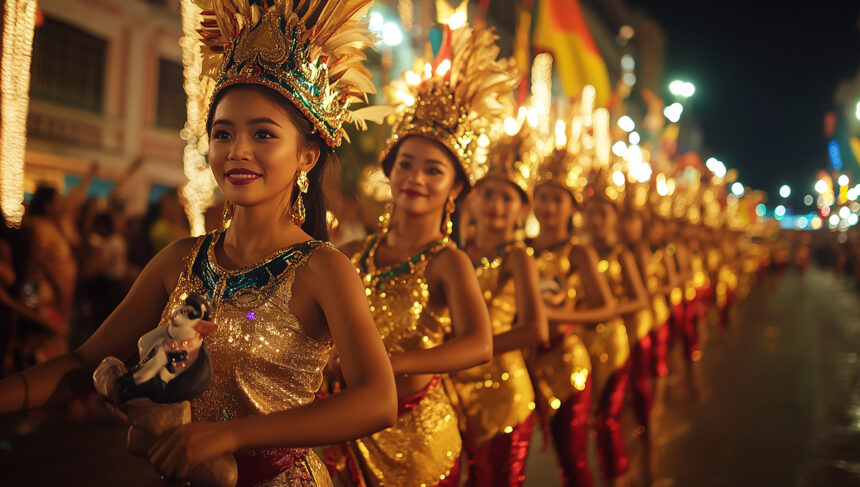
Come a little closer and let the warm tropical air wrap around you! Listen for the drumbeat calling the islands to action. As a traveller who has wandered the storied streets of Cebu, I offer you the most sincere and different welcome to an event like no other: the Sinulog Festival! Before we talk about the religious festival in the Philippines, let’s set aside the travel guides. What I present to you is not so much a description of an event but an echo of an emotion, a memory of sound and colours. “Travel is not to search for a place, but to search for a soul,” and here in Cebu City, the soul of the people shines the brightest.
The Sinulog is the most well-known festival in the Philippines. It is a spiritual experience and a spectacular celebration of history, faith, and community. This event occurs every third Sunday of January. When I first entered the essence of the Cebu festival, it felt as if I stepped into a timeless theatre where the sacred and the spectacular were performing a duet with passion. “The greatest use of life is to spend it for something that will outlast it,” and in the timelessness of the devotion to the Santo Niño, there is a cultural sense of legacy that has transcended hundreds of years. If you want to understand Filipino culture, faith, joy for life and hospitality, you must join the Sinulog festival.
Now prepare your senses, open up your hearts and go with the flow of the river; it is here that our collective journey will begin into the Soul of Cebu. “To experience a true celebration is to feel the heart of the world beating in time with your own,” and the Sinulog drum is the beat we all have been waiting for.
The Sacred Seed: A Narrative of the Past and Emotions
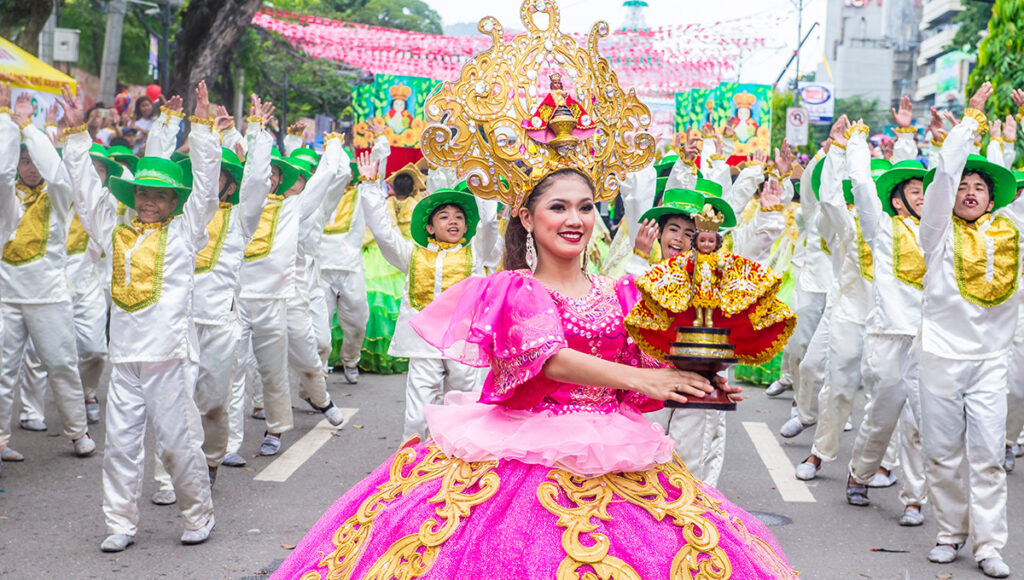
In order to fully grasp the visual extravaganza of the Sinulog festival, one must first appreciate its deeply spiritual centre. The festival itself commemorates the acceptance of Christianity by the Filipino people, under the auspices of the revered image of the Santo Niño de Ceú, the Child Jesus.
The story is remarkable, almost to the point of being unbelievable. Our references remind us that the origins of this Cebu festival date back almost five hundred years before the Spanish had their security. Ferdinand Magellan, the Portuguese explorer, sailed into Cebu in 1521, whereupon he presented the image of the Santo Niño as a baptismal gift to Hara Humamay, the Queen of Cebu. This act was the beginning of Christianity in the archipelago. This historical moment is the foundation for the annual Santo Niño celebration.
What helps set Sinulog apart, however, is how it carefully links this historical devotion with an ancestral pre-colonial tradition. The dance that is synonymous with the festival, the very name of Sinulog, originates from indigenous animist-style worship. This is an awe-inspiring expression of culture and resilience; a people take the faith of another and perform it through the claims of their ancestors.
A religious devotion here is a real and raw power. Throughout the days leading up to the Grand Parade, the heart of the city, the Basilica Minore del Santo Niño, is a place of pilgrimage for hundreds of thousands of people. When I stood with the crowd at dawn for Novena Mass, to call the energy a party atmosphere is wholly inaccurate; it was as earnest and honest as prayer, with nearly 500,000 pilgrims praying softly, quietly, and privately. I watched families light candles; their prayers lifted off the flame like the smoke of a flame. This was a tender reminder that at the core of our most grand celebration, the work of devotion is deeply personal and close to the heart. Crusaders will leave work early, not to spend the rest of the day resting in leisure, but to pilgrimage. A lovely sign of commitment to devotion and balance exists in the heart of the Cebuano people.
The Flow of the River: The Pure Simplicity of ‘Sulog’
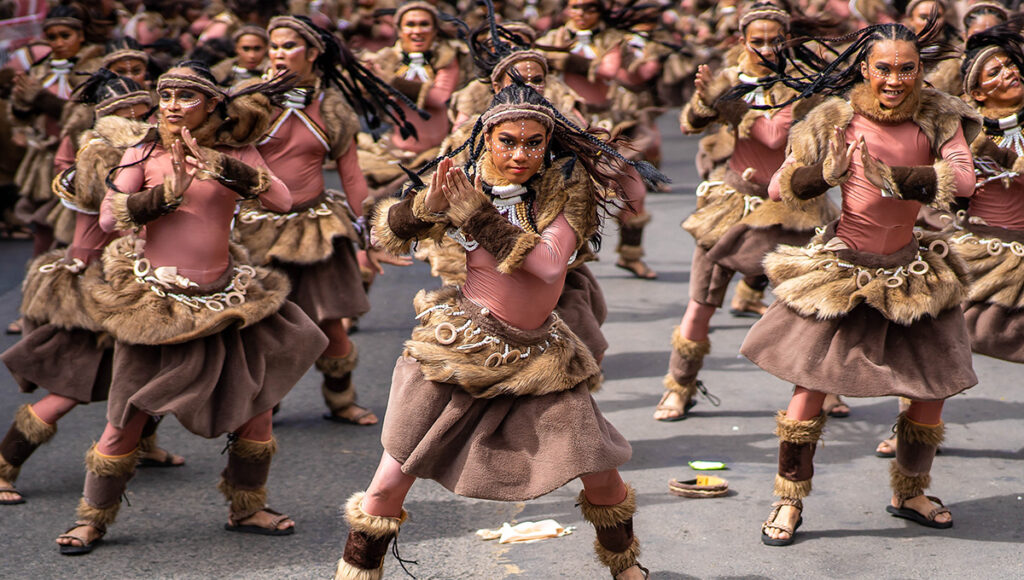
The term ‘Sinulog’ itself is derived from the Cebuano word ‘sulog’, which simply means ‘like the moving water current’. This is the key to the rhythm of the Sinulog Festival itself. Fellow travellers, observe the dance. You will see the river flowing.
The signature step, the motion performed by thousands of dancers with effortless precision, is a simple, hypnotic pattern of two steps forward and one step back. This signature Sinulog street dance is what defines the entire event.
As an observer, I initially saw what looked like a dance step. But in watching the movement flow, like it was moving with the tide, I came to understand that it was a powerful metaphor. It is the movement of the Pahina River; it is the advance and retreat of the ocean waves; it is the rhythm of life. The first two steps forward represent movement, progress and hope, while the single step back is a moment to pause and reflect, to acknowledge history or spiritual submission, all performed in the form of a Sinulog dance. A prayerful dance, and not in silence, but in ecstasy and joy.
When you are swept up in the throng, you are encouraged to join in, and you will hear the ubiquitous exclamation, “Pit Señor! Viva Sto. Niño!” a spontaneous release of prayer and praise such as a group exhalation of joyful breath. I can recall being shaken by the feel of the ground underfoot, not in sound, but in the distracted dance motion of the crowd in multiple rhythms. It is an experience of being entirely engulfed when you are no longer a bystander, but you become part of the “sulog”. This dance, simple yet raw, is the unbroken line that connects the Cebuano of today with the Cebuano of 500 years ago, and it’s the highlight of the Sinulog Festival in Cebu. Many other street performances also contribute to the energetic atmosphere.
The Huge Procession: Beauty on Display
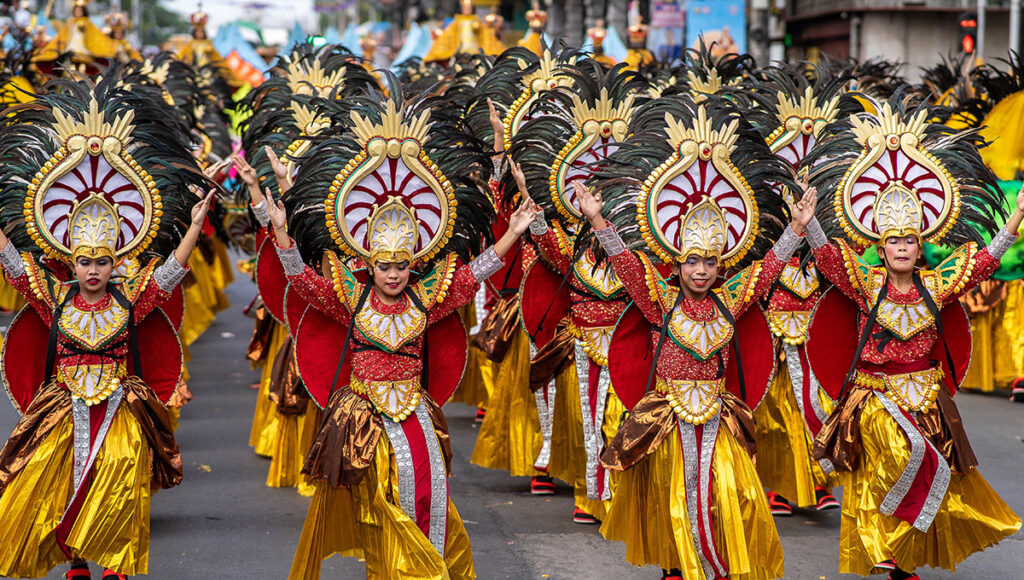
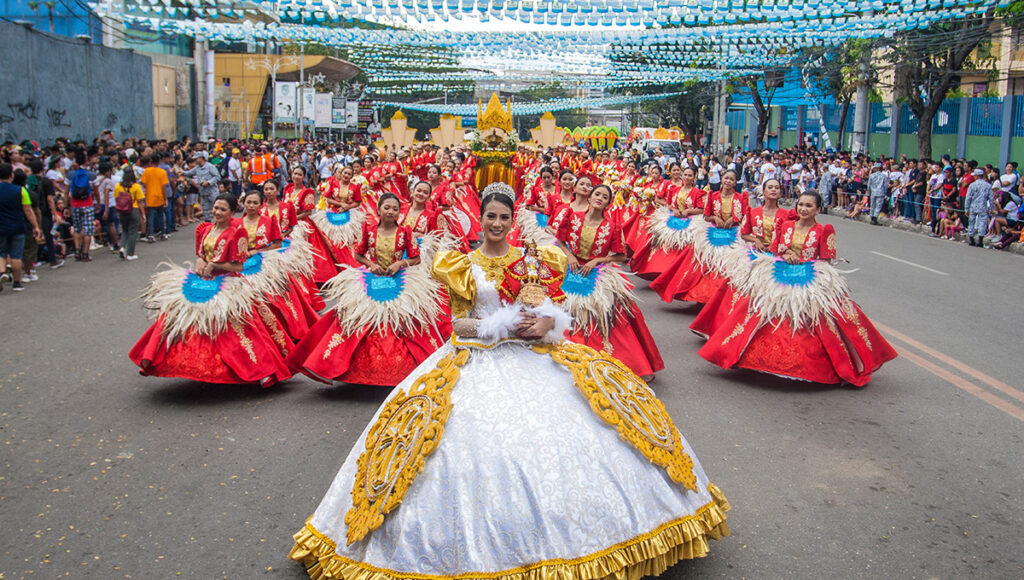
The Grand Parade is the culmination of the Sinulog Festival, a grand street event to match any carnival in the world, but firmly anchored in prayer. The day that the two-step-forward, one-step-back rhythm breaks out into a sea of colour, order, and theatrical brilliance.
Think of a ribbon of human artistry unspooling for kilometre after kilometre through the streets of the city. This Sinulog street dance is where the Cebuano love of artistic impulse and careful craftsmanship is on full display. I was blown away by the detailed costumes of the dance contingents. They were not just costumes; they were fabric, feather, and light creations that sometimes told Indigenous legends, sometimes recounted historical vestiges, or sometimes simply showed the splendour of the Santo Niño in heaven.
The effort involved in creating these floats is absolutely remarkable. From what I learnt from my chats with the local community, it usually takes months of planning and cooperative effort to make a float or a set of costumes. The parade is, in a way, a non-verbal display of the industriousness of the Cebuano: the same precision, inventiveness, and panache that they apply to their work is also seen on the streets. It is truly one of the most magnificent festivals in the Philippines. This cultural parade is a highlight.
The floats are just as impressive. The detail on these floats is simply amazing: the floats are intended to imitate scenes of Cebuano history, sometimes leading to the arrival of the Santo Niño, or perhaps pig farming. These moving models of art, all intended to impress upon the millions of spectators, signify the community spirit and fierce pride of the different provinces and municipalities that take part in the parade.
The massive scale of the Sinulog Festival in Cebu is astonishing. With an estimated one million or more of both onlookers and participants, the Sinulog transforms the city into the heartbeat of the Philippines. And while there is an unmanageable number of people within this ecosystem, it happens with an impressive amount of logistical detail, thanks in no small part to the cooperation of local government and businesses adjusting their schedules to support the event without impacting the productivity of the city. It feels like controlled chaos, with everything maintained through the respect for the tradition and reverence for the child Jesus. You can also hear local music accompanying the parade.
The Joy of Gathering and Homemade Flavour
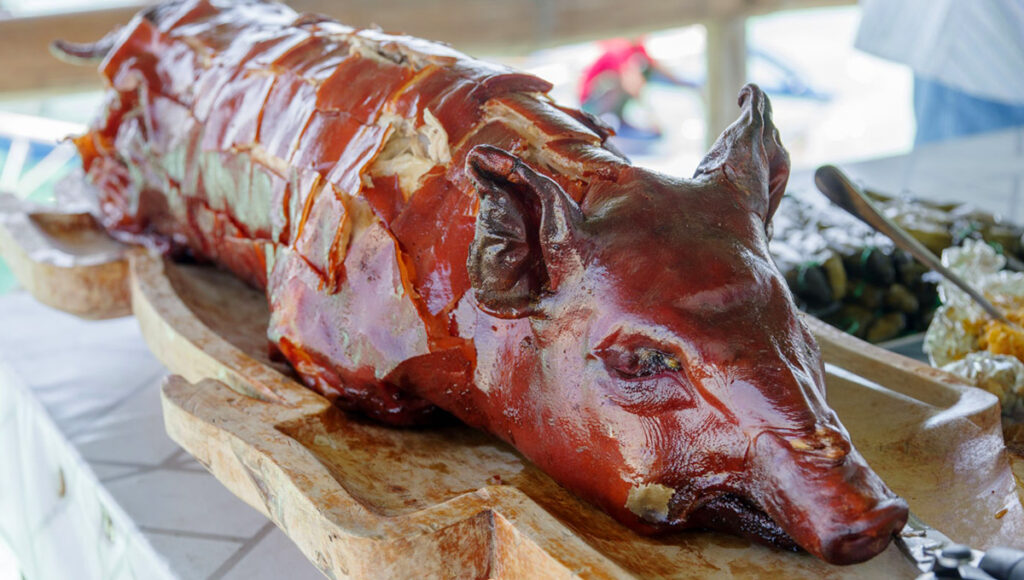
A Filipino festival is simply incomplete without food. And the Sinulog Festival is an adventure in and of itself in food tourism. But beyond the deliciousness, the festival provides a different kind of mindfully curated experience of that most famous of Cebuano traits, hospitality, a warmth and welcome that envelops you like a familiar, comfortable shawl.
While I was there, I felt less like a tourist than a faraway cousin. Spring is traditionally a time for family reunions, and the hospitable Cebuano character invites them then to open their homes and hearts to friends, relatives, and yes, even interested visitors. One humble Cebuano home invited me in, where laughter was the most plentiful ingredient.
Food represents a theme of Cebuano culture. The food you are probably going to enjoy is Cebuano Lechon, the roast pig that all Filipinos value for its incredibly crispy skin and succulent, flavourful meat. And it’s delicious without sauce.
Another speciality is Puso, or “hanging rice”. The rice is steamed in small, decorative, woven pouches from coconut leaves. Again, this is not only a beautiful and clever way to serve rice that keeps it clean and portable for street parties, but it also exhibits how art can become involved in practical, simple living in this part of the world. Eating is the great equaliser, and you quickly become aware of each other’s community and collaborative efforts together. You share a puso with a total stranger, and there you have it, you become friends. These simple acts are part of the enduring festival traditions.
This genuine warmth and openness span well beyond the festival. It is the ultimate reason the Cebuano people receive international recognition for their warm interpersonal skills; they create a collaborative, trusting, and inclusive environment, whether they are sharing a meal or working on a professionally based project.
The Festival’s Journey: Adjusting, Sustaining, and Creating Change
I was clear that the Sinulog I attended did not simply relay the old. Rather, it was a festival looking ahead and as forward-facing as they can be. While the energy is naturally a joyous celebration and crowded street gathering, there is a conscious awareness of responsibility and ultimately sustainability that characterises the newer Sinulog Festival.
The first impact is economic. As a visitor, you witness a vibrant city, hotels are full, local vendors flourish, and the service industry is busy. The Cebu festival is an economic driver for the region and attracts millions of visitors who infuse critical resources into the local economic sector. That economic resource is a positive byproduct of being proud of and so publicly appreciative of celebrations around their culture.
Secondly, and perhaps most encouragingly, is the increased consciousness of supporting environmental initiatives. Lately, event organisers and attendees have made a concerted effort to shift the massive Cebu Festival toward sustainability. I saw initiatives of waste reduction, highlighting recycling, and a general push for cleaner practices in the streets. The increase in environmental consciousness reflects an overall commitment of the Cebuano people to social responsibility and demonstrates that their loyalty to future endeavours is as strong as their loyalty to tradition.
We are witnessing a beautiful balance between ancient history and modern responsibility, between spiritual zeal and logistical brilliance, that makes the Sinulog one of the most remarkable cultural events on earth. It expresses a people that is undoubtedly capable of honouring their heritage through a week-long, explosive display of celebration and joy while staying committed to their community, their progress, and a sustainable future.
If you’re planning your Cebu trip, check our top things to do in Cebu City for more ideas to complement your Sinulog experience.
Echoes of Joy: The Last Hurrah
My dear travellers, you came seeking a unique and beautiful article, and I hope I have conveyed to you that the Sinulog Festival is more than an event to be read about; it is an experience to be lived, one that many explorers discover through the guidance and inspiration shared by World Pinoy Flights.
It is the drumbeat that keeps time for a resilient nation, one of the greatest festivals in the Philippines. It is the rhythmic two steps forward and one step back that symbolises the advance of progress while honouring the past, the iconic Sinulog street dance. It is the image of a child dancing with the same reverence as their great-grandmother.
When the music finally stops, and the floats are stowed away for the year, you’ll leave Cebu with a piece of its vibrant, faithful heart beating within you. You’ll have experienced an amazing show of collective devotion and artistic expression, and you will understand the fierceness of the people’s posture when they chant.
So, pack your bags, prepare for sensory overload, and join the chorus. Surrender to the rhythm. Come to Cebu. Pit Señor! Let the flow of the river carry you home, making this event the unforgettable centrepiece of your Cebu holidays.
FAQs about Sinulog Festival
When is the Sinulog Festival celebrated?
It is celebrated every third Sunday of January.
What does the festival commemorate regarding religious significance?
It is a celebration of the acceptance of Christianity by the Filipino people. The focus is on the venerated image of the Santo Niño de Cebú (“the Child Jesus”), which was given to the people by Ferdinand Magellan in 1521.
What does the word ‘Sinulog’ mean, and what is the dance step that is most associated with the festival?
Sinulog comes from the Cebuano word ‘sulog’, which means ‘like the flowing water current’ and the dance pattern is known for being in the rhythm of two steps forward and one step back.
What is the popular cuisine very well-known during the festival?
Cebuano Lechon (which is the roast pig that has a delicious crispy skin that also has wonderful meat) is a very prevalent and special feature, and there is also Puso, or “hanging rice”, that is a speciality for Cebuanos for this festival too.
What is the popular chant that you hear throughout the Sinulog festival celebration?
The spontaneous chant, prayer and praise is “Pit Señor! Viva Sto. Niño!”