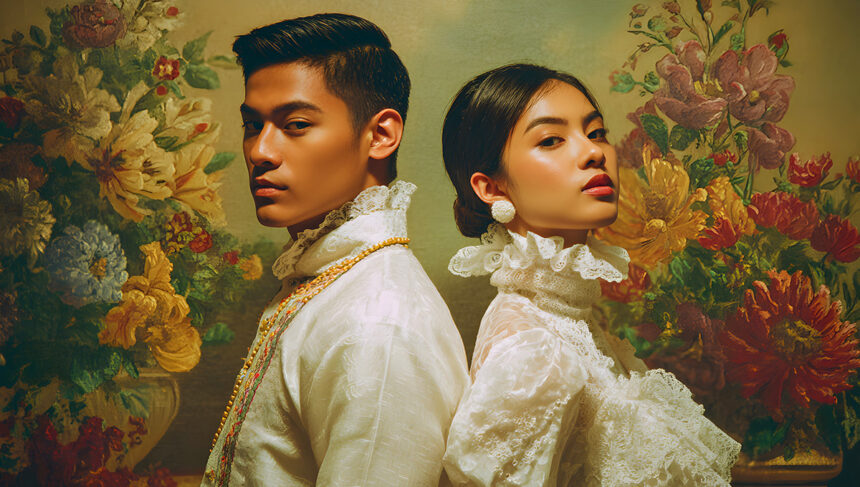
I imagined sunny beaches, bustling night markets, and a taste of the renowned Filipino hospitality as soon as I made my round-trip booking with World Pinoy Flights. I had no idea that the skies would serve as a runway for traditional Filipino clothing, creating a living museum of artistry, history, and identity. Come along on this adventure where a plane ticket becomes a cultural and stylistic exploration.
Landing in Manila: An Introductory View of the Filipino Traditional Clothing
Arriving in Manila, I smelt the air of street food and the muffled sound of traffic in the jeepneys. I started with Intramuros, which is the ancient walled city and the home to centuries of culture. Passing the ancient Spanish churches, I happened to see people in a street party, all of them dressed in beautiful Filipino traditional dress. Their colourful skirts and their gorgeous embroidered blouses created a moving picture, and I had no hurry: I was about to spend some time trying to review their clothes in detail.
The locals told me that the traditional dress of the Filipinos is not just a piece of clothing but a story. Every pattern, every colour, every stitch has a story that connects a group of people to history. The people who wear a Filipino traditional dress feel that they belong to a generation that cuts across the board.
From Barong Tagalog to Baro at Saya
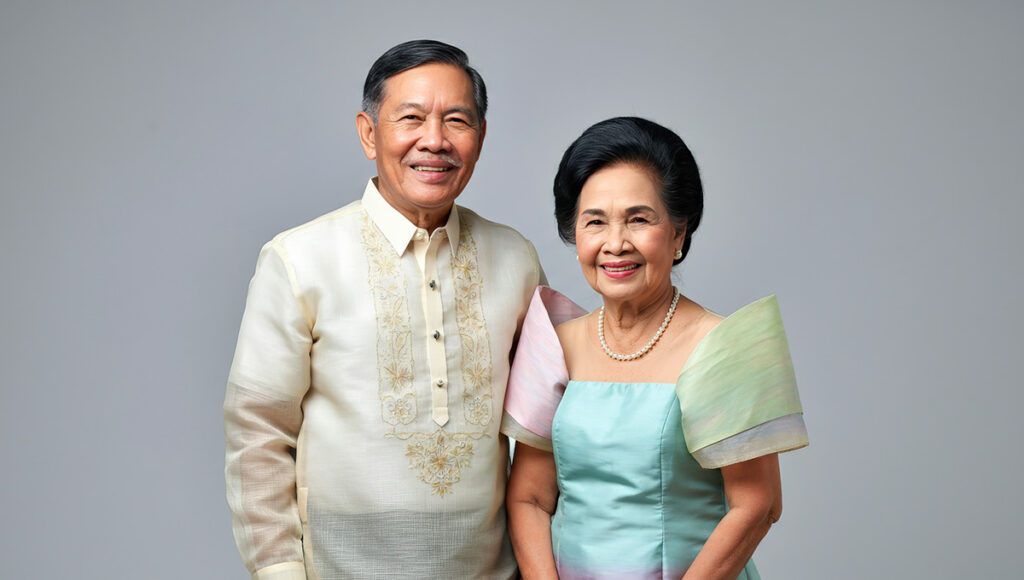
The following part of Intramuros led me to a booth which honoured two of the best-known clothes of this country, the Barong Tagalog and the Baro at Saya. The men wear lightweight embroidered shirts known as barongs, which are commonly associated with formal occasions. It is the national costume,’ the vendor replied to me. Then, indicating a woman at the other end, she was proudly wearing a Baro at Saya, a traditional dress of women worn during festivals and weddings: a jacket and skirt combination. The simplicity of one and the flashiness of the other, respectively, exemplify both ends of Filipino clothing.
The vendor proceeded to give me a Tagalog on a tiny card, and how it came about in the Luzon region and how it has been designed since the 14th century as it is today. Also, he wrote that the Barong Tagalog is commonly crafted in piña fibre, which is a native plant of the islands, a tribute to the abilities of the indigenous Filipino traditional clothing line. These clothing traditions form a vital part of the country’s identity and heritage, which you can explore further in our full guide to the Philippines’ culture and traditions.
An Eye to the Maria Clara Dress
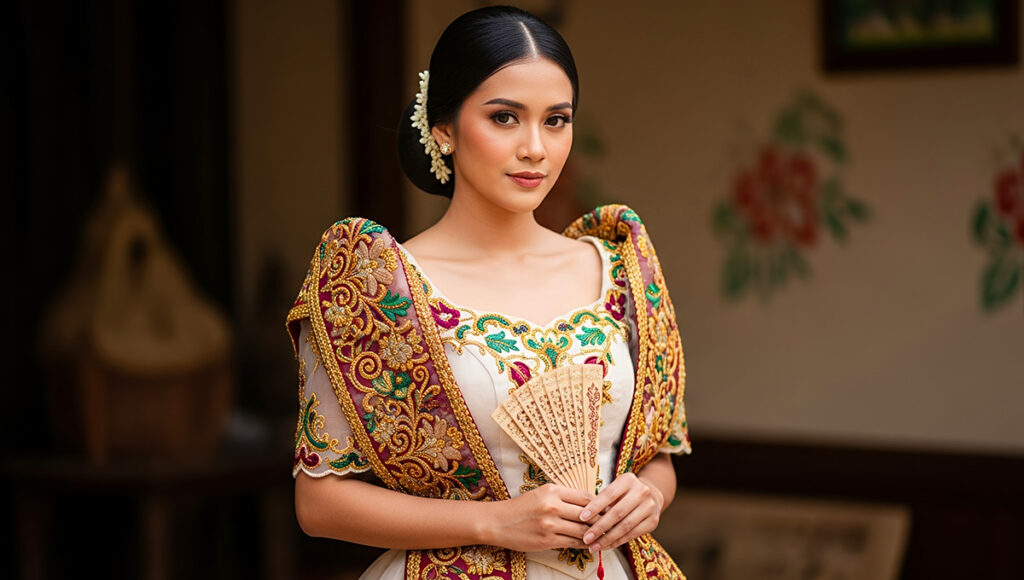
One day, on a quiet afternoon, I visited the National Museum of the Philippines. My guided visit took me to one of the exhibits featuring the dress known as the Maria Clara dress, which immediately evoked the image and the glorious colonial period. The dress, with its layers of lace, hand-embroidered designs, and floral motifs, is steeped in the history of the revolutionary era. I learnt that the Maria Clara dress was based on a real-life heroine and is now a symbol of the strength of women, at least. I was in shock because I was witnessing a work of art, which is the ultimate combination of cultural and modern fashion.
The Cultural Meaning of Textile Motives
When I was walking around the exterior of the Atrium of the National Museum, I noticed the sophisticated designs on most of the clothes: agua (wave), bulaklak (flower) and paghila (wind). Both themes are symbolic. The pattern of agua could be used as an example when referring to the island belonging to the sea, and the use of bulaklak is associated with prosperity. When I interviewed a textile worker in the street, she told me that the design inspiration usually stems from the ethnically applied practices of the other Philippine tribes in terms of their Filipino traditional clothing and that the cultural meaning of every motif is intergenerational.
Traveller tips: Fashion-Inspired
In case you are going to do such a journey, the following are some tips for you to have a smooth journey:
- Book Early – Manila and Cebu flights are booked very fast during the season of festivals.
- Dress Codes – A lot of cultural displays demand conservative clothing.
- Bring a Small Backpack – You will need to carry your finds, souvenirs and a camera.
- Keep Hydrated – The climate in the tropics can wear you out.
- Learn Simple Phrases – Greetings like “Salamat” and “Magandang araw” go a long way.
- Respect the Crafts – When taking photographs, seek permission.
Discover Beyond the Metro Manila Metropolitan Region – There are special lines of indigenous Filipino traditional clothing in Davao, Iloilo and Cagayan de Oro. These are but a few tips that will assist you in having not only an efficient but also a culturally rich traveller experience. If you’re planning a visit soon, you might also enjoy our guide on the best things to do in the Philippines.
Conclusion: A Journey Remembered
I ended my trip by being on the observation deck to see the lights and history of Manila below. I could relieve the vibrations of the Day of the Queen festival, the rhythmical beating of the drum, and the grace of the Barong Tagalog and Baro at Saya. The experience showed that an excellent flight can be a kind of ticket to a new world, one where people use fabric to create stories.
To travellers who want to mix the adventure of travelling and sightseeing with the splendour of the Filipino traditional clothing, World Pinoy Flights is not just an airline but a ticket to culture, style, and memory. Take the damp air, touch the cloth on your skin, and leave there not only the souvenirs but also a better understanding of the rich tapestry of the Philippines.
FAQs about Filipino Traditional Clothing
Does the airliner offer any cultural orientation prior to the flight?
Yes! World Pinoy flights collaborate with the local cultural centres to provide pre-flight seminars on the Filipino heritage and the importance of wearing Filipino traditional clothes.
Which part of the Philippines is the best place to view traditional clothes?
There are elaborate Luzon collections of barong Tagalog, Visayas collections of colourful baro at saya, and Mindanao collections of rich indigenous Filipino clothing.
Are there any limitations on wearing Filipino traditional clothing during a flight?
No restrictions are made, but one should make sure all loose accessories are secured so that they do not fall in the aisle. The majority of travellers use the barong Tagalog suits that are comfortable during short flights.
Where can I buy some authentic Filipino traditional dress when I am there?
Quiapo Market, Parian Arts, and the Cultural Centre of the Philippines are the best places. Each of them sells artisan works that celebrate the heritage of the national costume.
Will World Pinoy Flights be a shopping guide to Filipino traditional clothing?
Yes, with every reservation, you receive an online brochure with suggestions of local markets, artisan shops and a map of major cultural locations to experience the best of immersion.