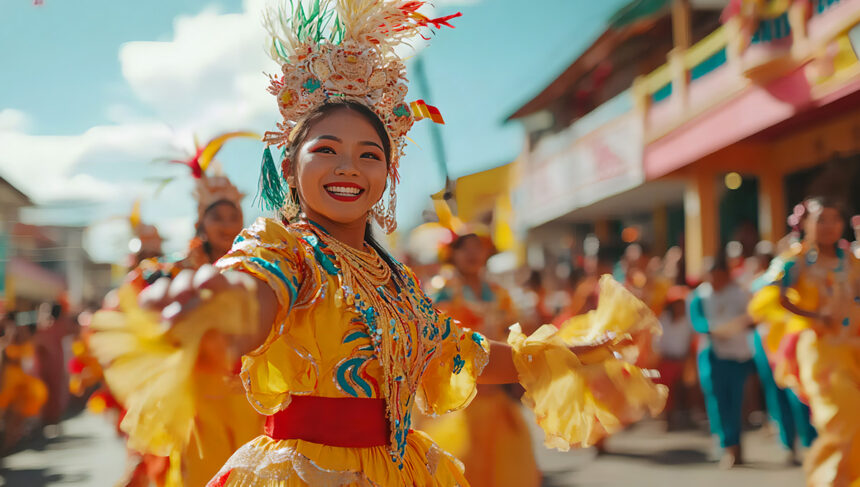
Look out! Just stop reading for a second! Put down the itinerary, fold your map, and just let it all sink in for a moment. If you thought this trip was simply going to be all about ticking off some sites, get ready for the sweetest surprise of your life!
Step away from the glossy brochures and well-beaten paths for a second and let me take a moment to tell you something so real and heartwarming from way down deep in Southeast Asia: the great big beautiful Philippines! This country, this lovely intricate stitching of more than 7,000 sun-soaked islands, doesn’t just tell you about its history and its heart, but it DANCES it! It sings it, leaps it, and spins it right into the sunlit air!
Yes, visiting the Philippines is about finding a thousand sunsets, but knowing the Philippines is about unpacking the secret language of our traditional dances. These are not dusty museum artefacts; these are living folklore! The colours are eye-popping, the sound of emotional and vibrant heritage is perfectly preserved with musical steps and the delightful clacking of bamboo, and the spinning is like dizzying pirouettes of a beautiful skirt. It is essential culture bursting at the seams! Filipino traditional dance is truly a window into the soul of the archipelago.
Because of this, I cannot contain my joy and extend the invitation for you to join me! We are not merely travelling across the maps of Luzon, Visayas, and Mindanao; we are bound by centuries of resilience, feminine poetry in courtship, ritual and reverence, and simply, breathtakingly beautiful things.
This experience, my friends, is not a tour; this is an immersion into the heartbeat of the Filipino people. It lives in movements that are so on point, so refined, and so irresistibly charismatic that they rise from the stage and become text, memorable text, pure, clean poetry!
Come, let the rhythm find you!
1. The Heart of the Archipelago: Cultural Rhythm

Filipino traditional dance is not just a singular phenomenon; it is a splendid compilation forged by human geography, native/indigenous styles, and decades of outside influence. To convey the overall beauty of folk dance, one must also first understand the periods of time that produced the phenomenon:
Pre-Colonial Echoes
Before any foreign flags were raised, the islands were alive with ritual. These dances were born of the land and sea, a culmination of motions which sought to pay homage to the deities, celebrate the abundance of the harvest, express desires for successful conquests in battle, or observe the verbal mimicry of the creatures of nature. The step patterns of the tribes in the northern Cordillera mountains of Luzon remain some of the most untouched, and the deeply sage ideology of the earth and ancestors is deeply connected, and is often accompanied by the context of the bronze gangsa (Filipino music instruments).
The Spanish Waltz and the Maria Clara Era
The Spanish galleons extended the courtly elegance of the Old World to the Philippines in the 16th century: the fandango, the jota, and the polka. These European forms did not merely replace the native dance but were couched in a Filipino aesthetic to form the beautiful Maria Clara dances. Named for the sweet and virtuous Tiple of Jose Rizal’s Noli Me Tangere, the dances featured the formal wear of the Spanish who had come to colonise the region: the embroidered Barong Tagalog for men and the flowing Maria Clara gown, modest with the native lacing that conveyed flirtation and Filipino sensibility. This repertoire forms a significant part of the Philippines traditional dance heritage. The Majestic South and Islamic Influence
Long before the arrival of the Spanish, Islam had made its presence felt in the deep south, particularly in Mindanao and the Sulu Archipelago. The dances in this region are constructed of rich, bright colours, flowing silks, and highly stylised hand and arm movements that draw upon Indo-Malayan culture. The dances honour the splendour of royalty and recount epic verse with a proud, unique, and enduring cultural identity.
2. Luzon’s Ability and Agility: Dances of Balance and Trust
The journey begins in the mountains of northern Luzon and the flat plains of the central Luzon area. The dances being discussed demand a fantastic amount of fine control and courageous nerve.
The Lightness of Pandanggo sa Ilaw
Imagine this scene: it is warm and still, with a bit of a breeze blowing occasionally. A dance performer, traditionally female, enters the scene; she is not just holding three lights, she is actually balancing them precariously, one oil lamp rests atop her head; the other two are held in each hand. This is a dance called Pandanggo sa Ilaw (Dance of the Light).
This dance originates from Lubang Island, Occidental Mindoro, and it is a stunning test of restraint and fluidity. Although the dance has roots in the Spanish Fandango, the dancer will perform her movements deliberately, flowing gently, up and down, side to side, and taking turns that follow the triple-time rhythms. It requires fine-tuning to avoid instability; it only takes the tiniest wrong step, or a slight twitch, to send the tiny flames tumbling down. It is an amazing visual metaphor associated with the delicateness of life, faith, and finding love; balance is found in the internal stillness, found in the external fluidity. This is a crucial piece of Luzon traditional dance.
The High Wire Act of Sayaw sa Bangko
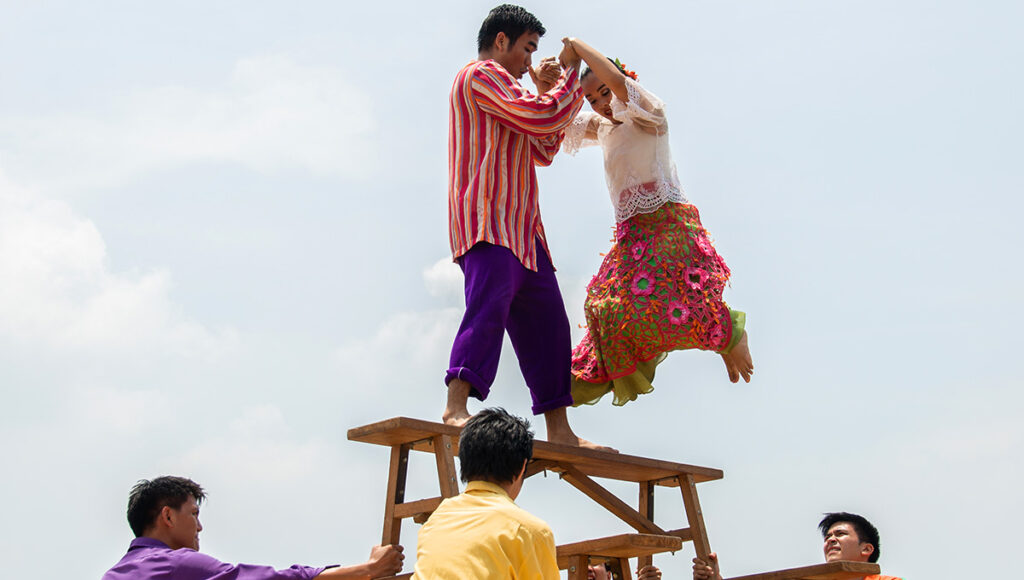
While the style of Pandanggo sa Ilaw is about balance, Sayaw sa Bangko (Dance on the Bench) is about trust, agility, and a thrilling sense of theatre. From Pangasinan, it is often performed by a man and woman dancing on the top side of a narrow, six-inch-wide wooden bench. The complexity of this Filipino cultural dance showcases incredible skill.
The suspense builds as dancers leap, twist, and shift their weight from one end of the bench to the other. Often, no one is looking down or at the bench itself. They were sewn together to rely thoroughly on their partner as a counterbalance. They demonstrate not only acrobatic skill but something more deeply symbolic about shared burden and support. It is a vivid and breathtaking ethnic dance performance that demonstrates the bayanihan spirit, the core Filipino value to unify as a community, in a thrilling test of balance.
3. Visayas’ Rhythms of Resilience and Courtship
Once across to the Visayan Islands, we meet the rhythm that forms the national character: animated, rapid, and thoroughly romantic. The Philippines traditional dance has many vibrant examples from this region.
Tinikling: The Dance of the Tikling Bird.
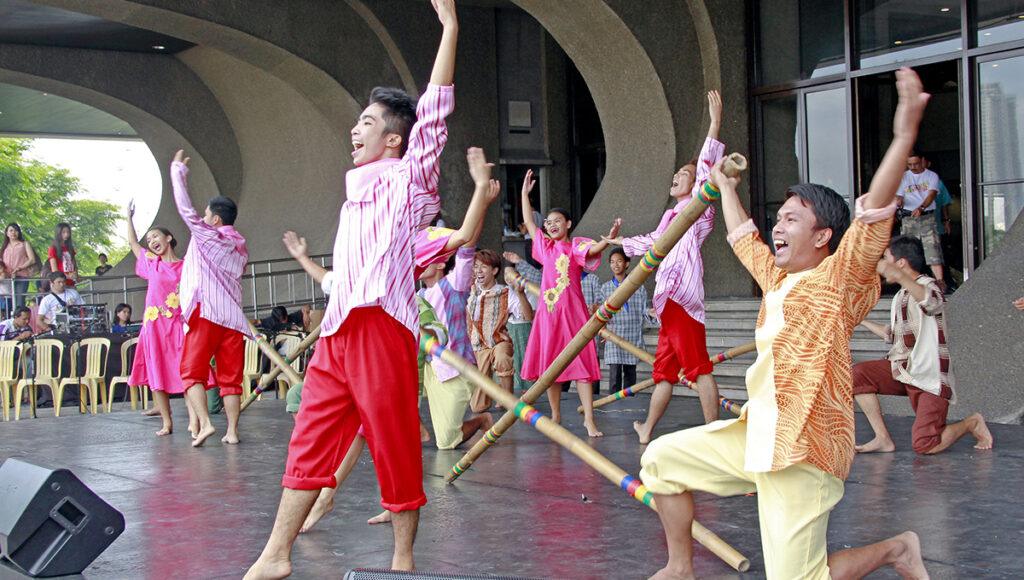
No examination of Filipino traditional dance is complete without the Tinikling, popularly recognised as the National Dance of the Philippines. The tinikling dance originated in Leyte during the Spanish colonisation and represents a conception of Filipino resilience, happiness, and dexterity. It remains an incredibly popular choice for demonstrations.
The name is derived from the Tikling bird, which is known for its long legs and its ability to hop between the traps set by farmers. During the performance, two poles made of bamboo are tapped, slid, and clapped together in an increasing tempo by two or more clappers on a flat surface. The dancers who perform the Tinikling are a male/female pair and use elaborate footwork, hopping rhythmically and with grace in and out of the poles.
The adrenaline of the Tinikling is in the growing tempo. At a certain point in the music, the tempo starts to increase, and the dancers’ motions become a blur, precise, agile, timed precisely, and adherent. It is a powerful visual reminder that no matter how life’s ‘traps’ are closing in, a sprightly heart and a sense of agility, even through artistry, can always find a way through.
Cariñosa: The Affectionate Flirtation
The Cariñosa (the one who is caring in nature or affectionate) is one of the most definitive historical dances of the Philippines, which originates from Panay Island. Perhaps one of the most unique jewels in the María Clara dance repertoire is its grace and understated romanticism. It is a beautiful example ofFilipinoo cultural dance, forming a core part of Visayan dances.
The cariñosa dance movements represent a slow, graceful hide-and-seek game. The woman often uses a handkerchief or a fan to cover the full extent of her face, while coyly sneaking peeks at her admirer. The male dancer dances just outside of an appropriate distance with tentative steps and flirtatious body language. It is a beautiful, fresh way of restraint by communicating the sentiment of love and affection and reveals the elegance of loving affection with grace and richness without brashness
The gentle sigh of the castanets with the soft pulsing of the skirts captures a romantic era of whispered promises and flirted glances from outside anapproximatelye fashionable fan. For travellers eager to explore more about officially recognised Philippine cultural heritage, you may also visit the National Commission for Culture and the Arts (NCCA).
4. The Regal Tapestry of Mindanao: Epics and Mock Battles
Travelling south to the second largest island, Mindanao, one arrives at a culturally distinct realm from the Spanish-colonised North, a region deeply connected to the country’s rich culture and traditions. The dances here draw on indigenous and Islamic heritage and often display a tradition centred on epic tales and valiant communal pride. The traditions of Filipino folk dance are especially rich here.
Singkil: The Royal Splendour
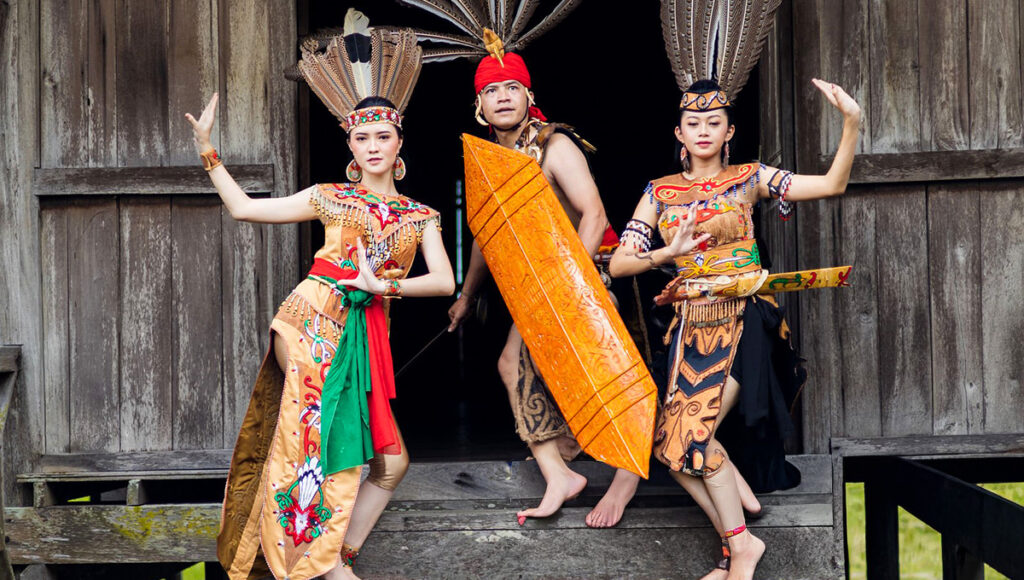
The Singkil, a Filipino traditional dance of the Maranao people, is possibly the most visually beautiful and dramatically complicated of the Muslim dances, with direct connection to the great epic poem Darangen. The principal storyline of the dance tells the story of Princess Gandingan,n who is abducted and escapes the enchanted forest laced with evil spirits.
The female dancer performs as Princess Gandingan, dressed in luxurious and colourful silk clothing, and incorporates brass ankle bells (which are called singkil). She focuses on weaving among 2 pairs of criss-crossed bamboo poles, which are dramatically slappedtogether inr rapid succession by attendant dancers. Her movements visualise her battle against the enchanted woodland of bent trees and rolling boulders. Finally, the Royal Prince appears with a sword or spear in hand for her protection in order to rescue her. All in all, this piece is a majestic presentation of royal bearing, a sorcerer’s craft, and deep storytelling.
The Maglalatik (the War of the Coconuts) originated in Biñan, Laguna (although sometimes lumped in with dances from the south because of its martial theme). The Maglalatik is an energetic and purely male mock war dance. The dancers are stripped to the waist and wear either red or blue trousers, but they are strapped down with two coconut shell halves, or bao, secured to their hands, chest, back, and pelvic area. This fascinating example of Philippine traditional dance tells a unique story.
The dance is a story about a war between the Christian and Muslim Moro tribesmen over coconut meat (the prized latik) that was of high value. The dance has four parts: two for the palabas (the war) and two for after the palabas, for reconciliation. There is a terrific percussive rhythm generated from the banging of the coconut shells against each other and their bodies, creating an electric sound and tone! The dance is a show of masculine strength, prowess, and communal feasting and is today performed as an offering to San Isidro de Labrador, the patron saint of farmers.
5. A Travel Log on Cultural Heritage
As I view vivid displays of culture and performance, the athleticism of the tinikling dance, the gentle movements required for the Pandanggo sa Ilaw, and the regal motions of the Singkil, I can see that this is more than the art of performance for performance’s sake or entertainment, like all of the people in traditional dress that I see around me, but the cultural history of a people by way of eclectic artistic forms of the body. Filipino traditional dance serves as a vital cultural link.
In an increasingly globalising world, these steps in culture are invaluable symptoms of the past that connect Indigenous peoples to their modern lives of capitalism while preserving the stories, rituals, and values of their ancestors. They preserve the traditions that teach us about the spirit of bayanihan and collective efforts exemplified whether you are dancing on a narrow bench or navigating a clapping bamboo, characterised by the spirits of your ancestors loving you, to join them dancing in courtship with the graceful cariñosa dance and the resilience we now face as Indigenous people from a common past beyond a victim experience of colonisation. Experiencing Filipino traditional dance offers profound insights.
To those few of us who are called guests on this sacred land, we again see the great respect and experience of bearing witness to the dance performances. It is more than clapping to dance that takes historical traditions of preserving language, rhythms and memories. We have much to consider when we see history, Moo Gua preserved through muscle memory and the beat of the songs.
My Final Thoughts
If you want the real and unique beauty of the Philippines, get beyond the beaches and the skyline. Go to the village fiesta, go to the cultural centre, and let the beating of the gongs and the tap of the bamboo wash over you. As the dancers perform the exciting tinikling dance or the charming cariñosa dance, it seems as if the islands themselves are breathing. This is a precious cultural gift, a magnificent display of Filipino folk dance and a vital part of the Filipino cultural dance heritage. Until we meet again, may you continue to explore, and may you continue to find the poetry in the movement.
FAQs about Filipino Traditional Dance
What is considered the national dance of the Philippines?
Tinikling is commonly recognised as the national dance of the Philippines.
Which area is associated with the Pandanggo sa Ilaw and Sayaw sa Bangko dances?
The Pandanggo sa Ilaw and Sayaw sa Bangko dances focus on balance and dexterity and are from the Luzon area.
What does the Cariñosa dance signify?
The Cariñosa dance (part of the María Clara genre) is characterised by slow, warm-hearted and graceful flirtation between man and woman, like a game of hide-and-seek.
What is the importance of the Singkil dance?
The Singkil dance is a royal dance of the Maranao from Mindanao and represents the tale of Princess Gandingan escaping the enchanted forest. It is a representation of royalty and storytelling.
What do the coconut shell halves represent in the Maglalatik dance?
The dancers in the Maglalatik dance (a mock war dance) called a maglalatik strap the coconut shell halves (bao) to their bodies as instruments and click them together to create sound.