We travel not to escape life, but for life not to escape us.
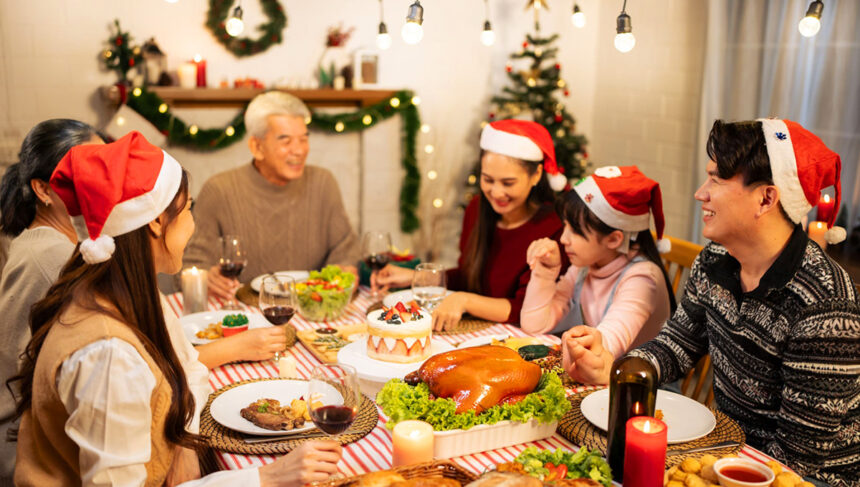
Friends, explorers, and weekend warriors: If you think the best stories aren’t on a page but rather found on a plate, I encourage you to lean in. Let the good times begin. Welcome to the Philippines, the only place in the world where holiday feasts don’t just happen but begin a month-long gourmand siege that lasts nearly half the year. Don’t get me wrong, Christmas lights and Christmas carols, of course, have their charm, but don’t lose focus on where the real beating heart of Filipino Yuletide is the feast of Filipino Christmas food heaped high on an overflowing table, at a Filipino Noche Buena feast.
As an incessant traveller, I have broken bread in several countries, but nothing can compare to the Kwanza, undulant, generous spirit, and steadfast necessity of traditional Filipino Christmas pudding. Philippine food as tradition. It’s an incredible tapestry of Malay, Spanish, Chinese, and local flavours that have slowly evolved together for centuries into a meal that is an utter, grounded exchange about faith, family, and the spirit of generous hospitality.
Forget about those cold winter nights and spiced wine; we are talking about tropical warmth, the smell of slow-cooked food, and a feast so full of joy that the action spills out into the street. Life, let me hold your hand and walk you through the lively and plentiful landscape of the Filipino Christmas handa, an incredible spread, where every single item has a story behind it, forming the ultimate Filipino Christmas menu.
Chapter One: The Beginning of the Feast, Simbang Gabi and Kakanin
You begin your food journey long before Christmas Eve. You begin with nine pre-dawn masses (called Simbang Gabi), which is a way to show devotion. In exchange for your faith, the warmth and fragrance promised to you await you outside the church doors. This is your first encounter with the magical experience of Filipino Christmas food rice cakes, or kakanin.
Just picture it: you walk out in the chilly tropical morning air, and your senses are bombarded with thick incense and gentle coolness. You walk out, and before you is a series of makeshift stalls, light from gas lamps flickering across two important, beautiful creations.
Bibingka: The Golden colour
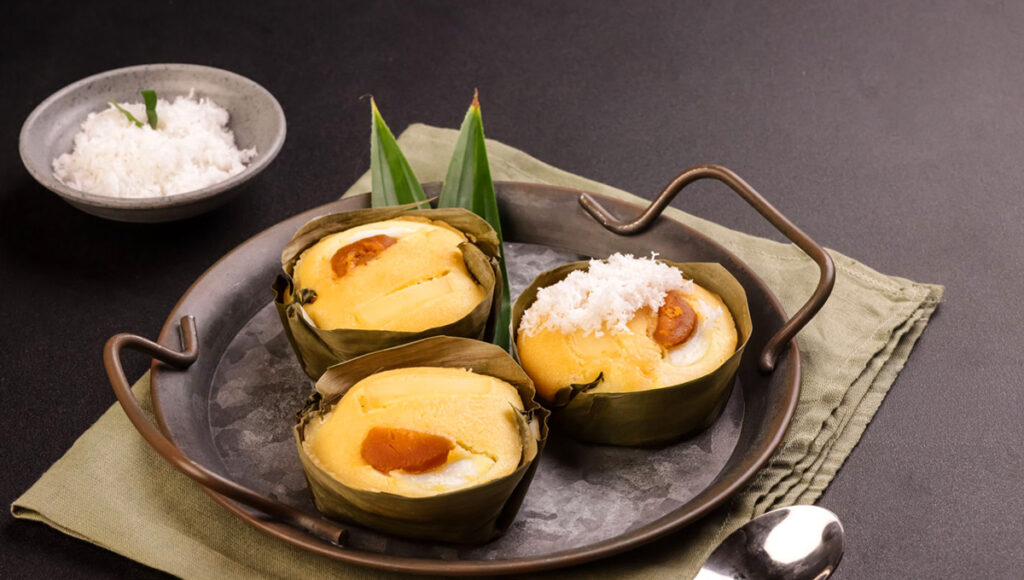
This is not just a cake, it is a soulful experience. Bibingka is a thick, somewhat sweet rice cake baked in a clay oven (called pugon), lined with local banana leaves that provide a recognisable and smoky smell. It is eaten hot and smeared with melted butter (or margarine), sprinkled with grated coconut, and, of course, topped with slices of salted duck egg and cheese.
The combination is amazing, the gentle sweetness of the rice, the rich saltiness of the egg, the sharpness of the cheese, a mixture of textures and flavours that brings you firmly back to this context. To have Bibingka there and then, standing with your community after the church service, is to experience the spirit of Filipino togetherness. This is one of the cherished holiday food traditions.
The Purple Dream: Puto Bumbong
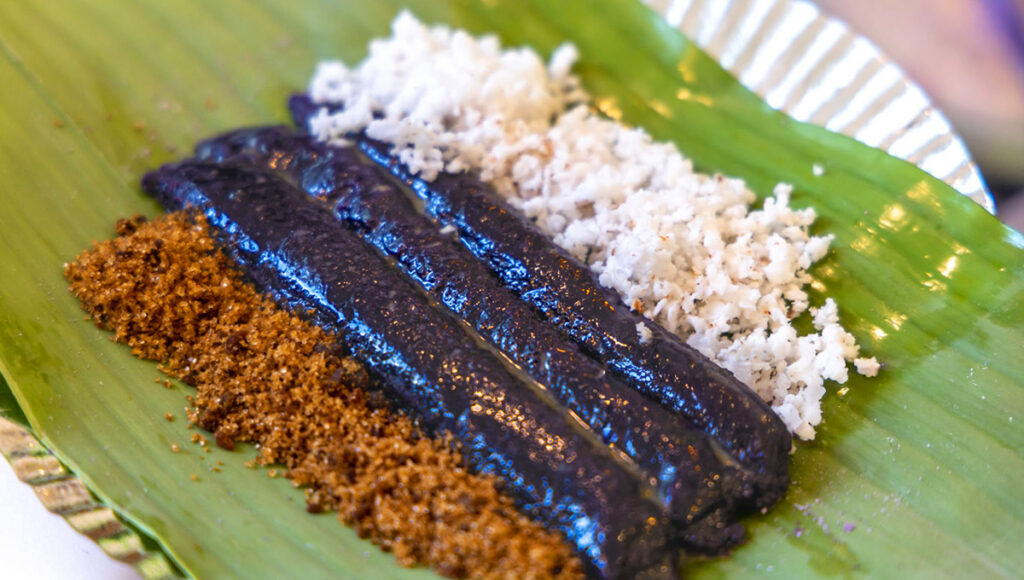
Next to the yellow Bibingka is the royal version, which is Puto Bumbong. This amazing, deep purple treat is made from sticky rice (pirurutong) steamed inside thin bamboo tubes (bumbong). The colour comes from the type of rice. Once done, the small cakes are pushed onto a banana leaf, brushed with butter and covered with brown sugar and freshly grated coconut. They are nice and warm, chewy, and smell nice – and then there’s the special sweetness.
What could be better than Puto Bumbong paired with a mug of Tsokolate Eh? Tsokolate Eh is the thick, rich Filipino hot chocolate made from pure cacao tableya (cocoa tablets), which is whisked into a thick drink from a wooden tool called a batidor. It’s an enveloping warmth, which is, of itself, a warm hug from the Philippines. The tradition of eating these holiday snacks after dawn mass is a delightful part of the Philippines’ Christmas dinner experience.
Chapter Two: Noche Buena, A Table of Plenty and Fortune
The high point of the holiday season is the Noche Buena, the festive meal, on Christmas Eve, late at night, extended after midnight. This is the point where the home is a delicacy. transformed into a celebration, and the dining table serves as an expression of joy and expectations for the coming year.
The table is a representation of the country’s culinary history, featuring show-stopping plates of either Spanish colonial tradition or heartier, native ingredients that make up the incredible spread of Filipino Christmas food.
The Main Course: Hamon and Queso de Bola
Every Filipino Noche Buena needs one of the centrepieces: Hamonado, the sweet, slowly cooked Christmas ham. The ham has a sweet glaze, often with pineapple, that offers some sweetness that goes well with the savoury, tender pork. In a way, the ham is the centre of the meal and symbolises prosperity.
Just like the ham, there is always a sphere that goes with it, Edam cheese or Queso de Bola. This red ball of cheese is usually sliced and served with the ham and soft Pandesal (the everyday bread roll, which is made special during the holidays). The reason for a ball, and also, like many fruits during the New Year, is that it symbolises plenty and family circle or continuity.
The Lovely Lechon: A King at the Dinner Table
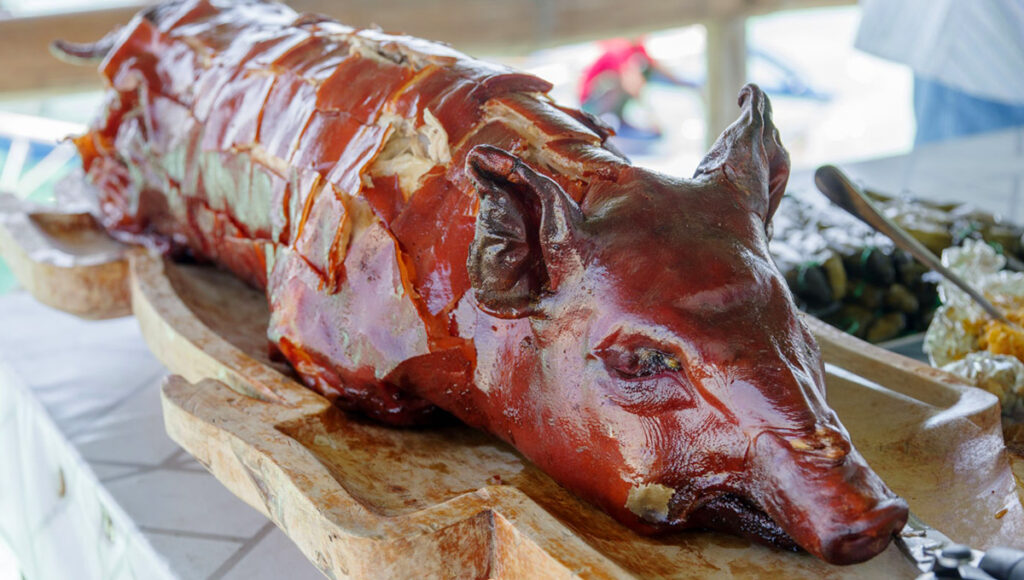
If there is one dish that yells out ‘celebration’ in the Philippines, it is the lechon, or whole roasted pig. If you are a traveller, the second you see it come out, golden brown, perfectly crispy, and shiny, it is unforgettable, certainly a picture to snap. The crackling, or chicharrón, that covers the pig is the most sought-after morsel. Each piece of crunchy skin is part of the concert of the meal. While it has the potential to have a prime placement at the Media Noche (New Year’s Eve), on Christmas Eve, it turns the Philippines’ Christmas dinner into pure banqueting glory, fit for a king, especially in the eyes of the Filipino family dinner. Its epic grandeur has meaning: that it represents the ultimate good luck and a successful year passed.
Noodles and Long Life: Pancit Malabon
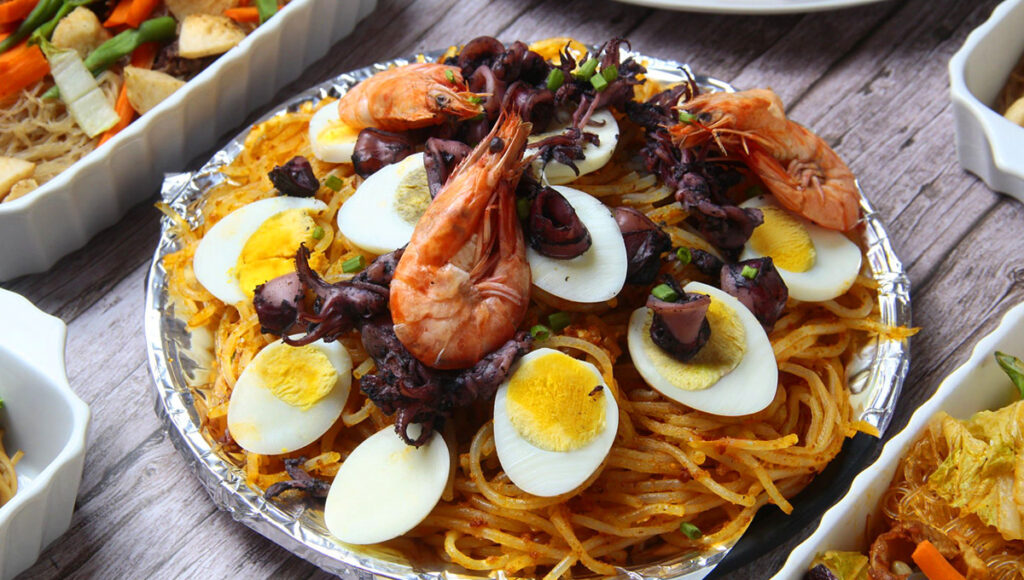
To keep things balanced and fair, a meal must include noodles, which are said to represent long life and good health. Meals are very good for you and lengthen your life. Take a look at Pancit Malabon (or any similar noodle dishes like Palabok). Pancit Malabon is a beautiful plate. It uses thick rice noodles that are served with a rich, orange sauce of shrimp and pork broth on top. It is covered with a veritable garden of toppings: smoked fish flakes, shrimp, squid, hard-boiled eggs, and crushed pork cracklings. This is a filling noodle dish that is predominantly seafood-based and is distinctly Filipino, and always a highlight of the Filipino Christmas menu.
Chapter 3: The Filling and Comforting Flavours of Home
Besides the grand food, the Filipino Christmas table is filled with food typically found at home, or what we refer to as Handan, which represents the Philippines’ culture and traditions, and the comfort or flavourful taste of everyday Philippine cooking.
Sweet and Sour Heart: Sinigang na Baboy
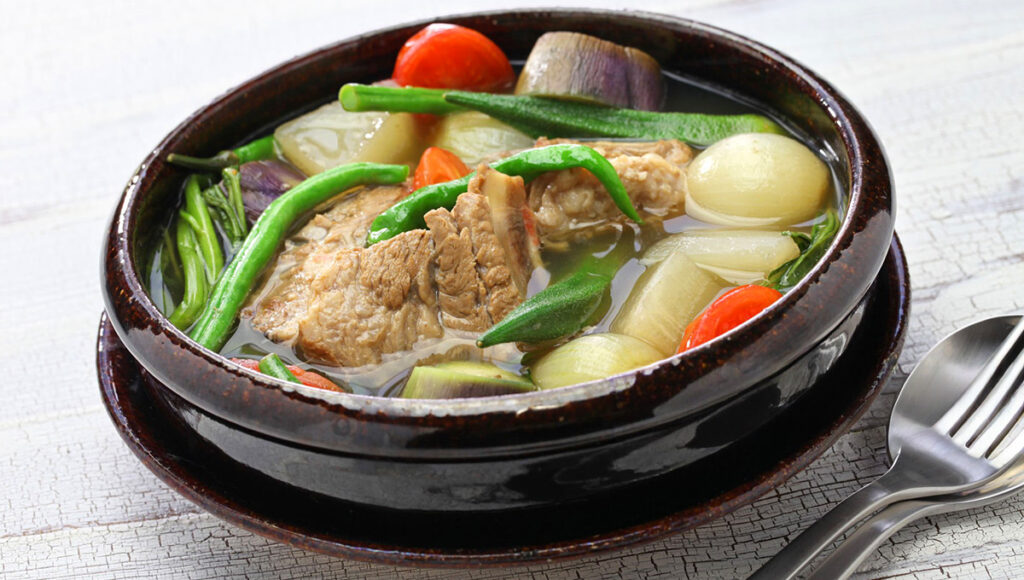
You probably would not think of having a sour soup for a traditional dishes table, but Sinigang na baboy is absolutely essential. This flavourful and transplendent tart tamarind-based broth is filled with pork belly and an array of vegetables, such as taro, okra and radish. It also serves a most important purpose: after consuming the richness of the ham and the lechon, it offers a wonderfully acidic counterbalance to cleanse the palate and fuel/resist your appetite for more. It is comfort in a bowl flavour that tastes like family, a loving family kitchen. This type of contrast is key to the overall experience of Filipino Christmas food.
Kare-Kare: A Nutty Hug
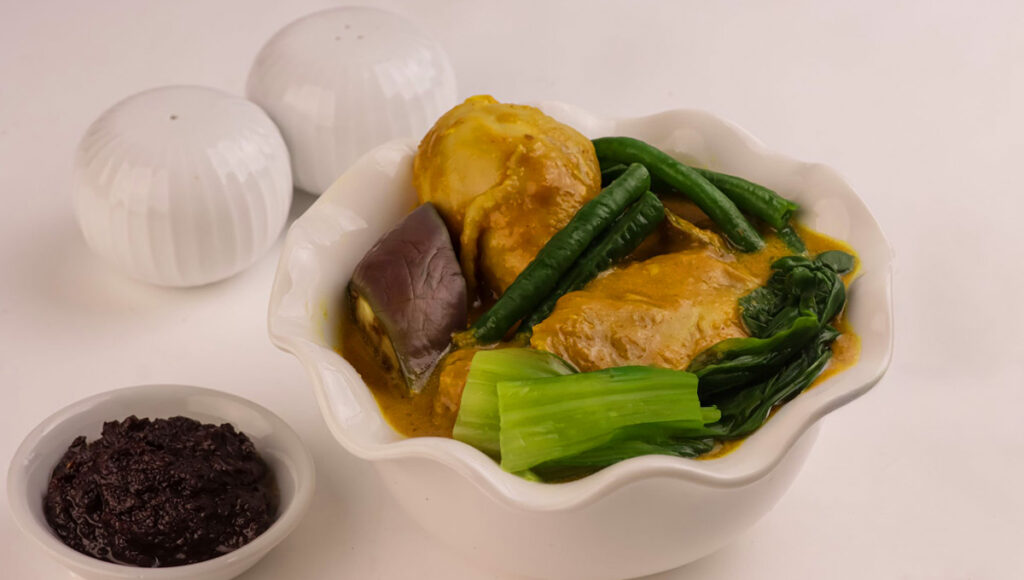
I really love Kare-Kare. It’s a heavy, luscious stew made with oxtail, tripe, and vegetables, slowly cooked in a nutty peanut-based sauce. The peanuts are so earthy that they provide an interesting consistency in your mouth. But the most important part of this dish is the essential condiment that goes with it: a scoop of bagoong (fermented shrimp paste). It’s packed with salty umami-fortified flavour, and when you stir that into the mild, nutty sauce, it becomes a huge addictive experience. It’s just a complex, beautiful dance of flavours in the Philippines.
Simple Spicy Pleasure: Laing
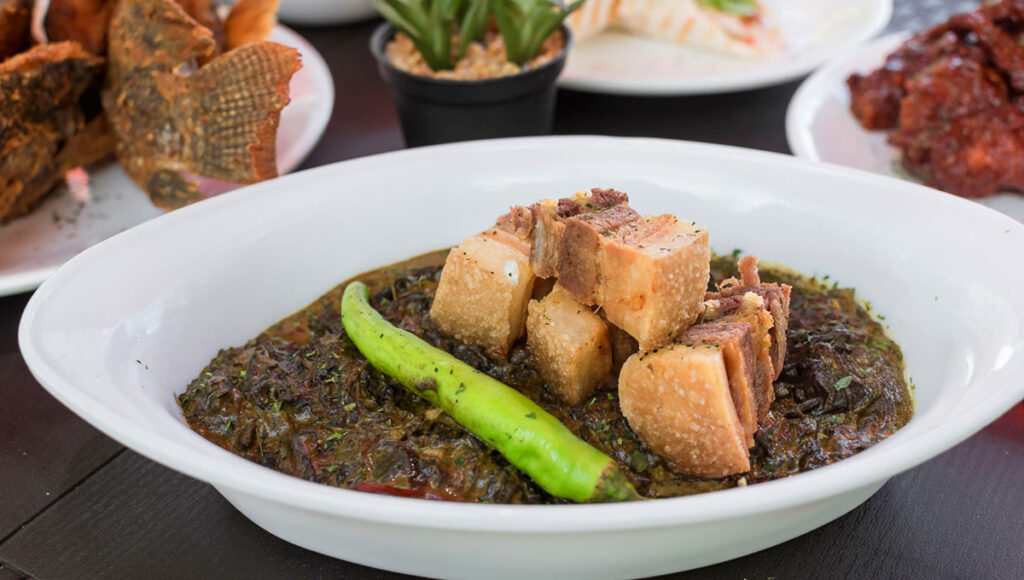
For something from Bicol, you might get Laing. This creamy spicy dish seems to be a work of genius. Taro leaves are slowly boiled in coconut milk and seasoned with ginger, garlic, and plenty of chillies! This dish is easy to cook, velvety rich, and a somewhat spicy side dish that adds depth and complexity to the entire spread.
Chapter Four: A Sweet Ending and a New Year’s Promise
As Christmas Day arrives and the leftovers are taken care of, the cooking celebration turns its focus to preparing the Media Noche on New Year’s Eve.
Classic Filipino Desserts
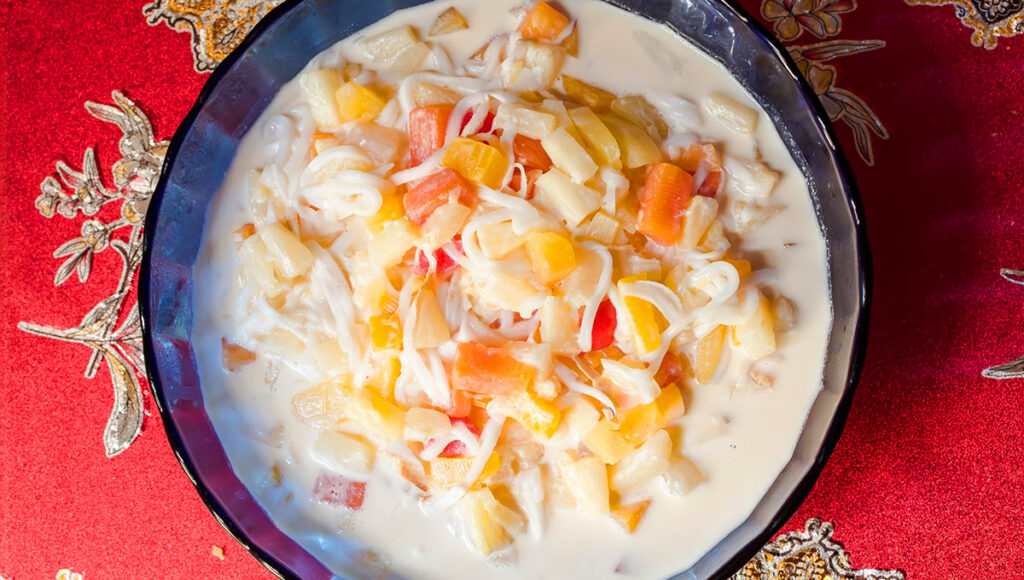
Desserts are a good sweet ending. Buko salad is always around: a creamy, refreshing mixture of shredded young coconut (buko), cream, and condensed milk, sometimes in it is also nata de coco (coconut gel) or tropical fruits. It is a cold tropical palate cleanser. You might also want a soothing festive drink option alongside these treats.

You will probably see Sapin-Sapin, a layered sticky rice cake that is usually coloured in violet (ube), yellow (langka or custard), and pink. ‘Sapin-Sapin’ literally means ‘layers’, but it also represents the diversity and colour of the Filipino celebration. This sweet end rounds out the perfect Filipino Christmas menu.
Symbolic Sweets for the New Year
At Media Noche, there are many meanings of fortune. The sweetest is the presentation of Twelve Round Fruits, one for each month of the year. This includes grapes, oranges, apples, and noble pomelo. The shape represents coins, and implies that you will have plenty and riches, a lucky new year.
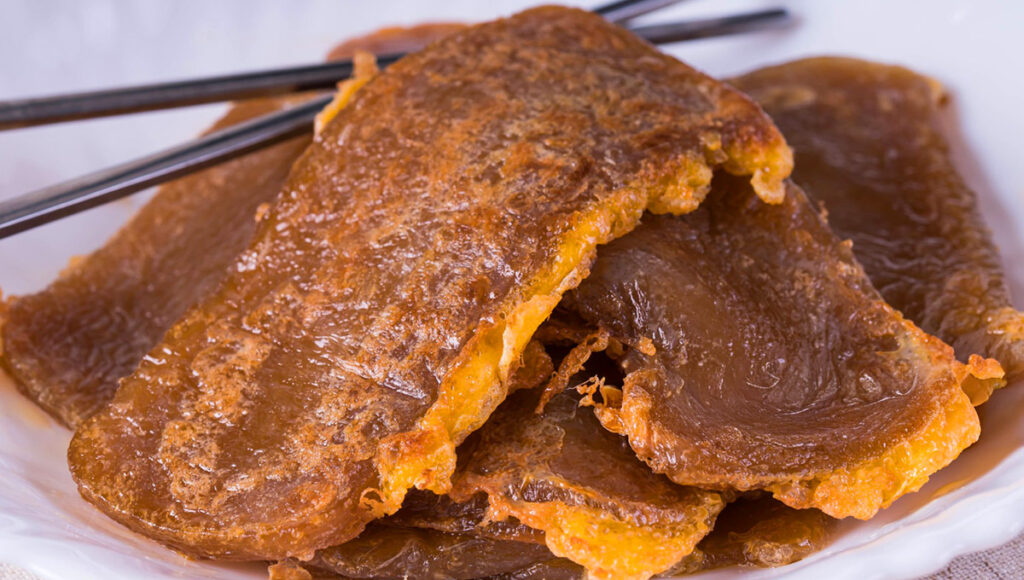
And then there is Tikoy, which is a Chinese-influenced dessert made of sticky and sweet rice flour. A soon-to-be-fried, crunchy little treat, it says that if you consume Tikoy, then good fortune will stick around, despite what happens in the new year. If you consume enough, in addition to good fortune, it will also promote close ties with the family. The range of desserts is an integral part of the overall Filipino Christmas food experience, from the classic puto bumbong to the New Year sweets.
For more on official tourism initiatives and food culture, visit the Department of Tourism (DOT)
A Final Goodbye from the Boxed Farewell Team
Food is our common ground, a universal experience.
Dear travellers, I have come to learn that traditional Filipino Christmas food is much more than a menu; it is a personal manifestation of Bayanihan, the spirit of community. Every batch of unctuous Bibingka, every crunchy jowl of Lechon skin, and every luscious spoon of Kare-Kare invite you into the heart of the Filipino family, creating a memorable Filipino noche buena during your holiday to the Philippines.
It is a promise of good ingredients and a long time of preparation that they are going to share their very best with those they love, and you are one of them. So go! Travel the archipelago, and experience the feast for yourself; it is the most beautiful, unique, and generous Christmas gift you will ever receive.
Mabuhay and Maligayang Pasko!
FAQs About Filipino Christmas Food
What are the two important rice cakes consumed after Simbang Gabi (masses before dawn)?
The two important rice cakes are Bibingka (yellow, cooked rice cake) and Puto Bumbong (cooked, deep-purple sticky rice in bamboo tubes).
What are the centrepieces of the traditional Filipino Noche Buena feast?
The centrepieces are Hamon (sweet Christmas ham) and Queso de Bola (Edam cheese).
What is lechon, and what does it symbolise in a Filipino feast?
Lechon is a whole roasted pig with crispy skin, and its elegance symbolises good luck and a successful year.
Why are noodles (Pancit Malabon) in the holiday menu?
Noodles represent a wish for long life and health.
What other New Year’s Eve tradition, besides Buko Salad, is meant to bring prosperity?
Serving twelve round fruits (one fruit for each month) to symbolise coins and to have wealth and plenty for the year.